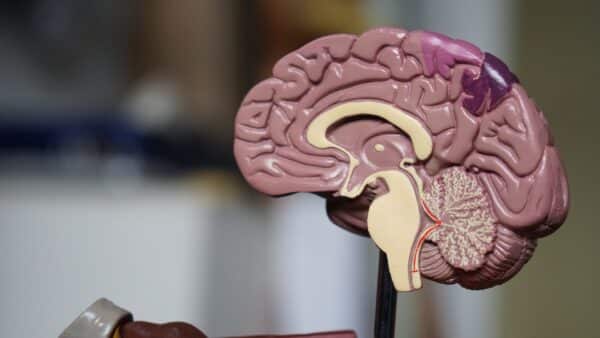
After a car accident, the injuries you can see get the attention: the damage to the vehicles, the cut on your face, the broken bone in your arm.
A brain injury doesn’t show up that way. It is one of the most commonly missed injuries after a crash, not because it is rare but because the early symptoms look like the ordinary aftermath of a frightening, physically jarring day: pain, stress, exhaustion, poor sleep. Traumatic brain injury symptoms can appear right away or take hours or days to show, and they can keep changing well into recovery.
This article covers what to watch for, when to get help, and why the medical record you build in the first weeks matters later. If you are reading this for someone else — a spouse, a parent, a child who was in the crash — the emergency list below applies to them, and much of the rest applies to you, because you are the person most likely to notice the change.
What a traumatic brain injury is
A traumatic brain injury affects how your brain works. It can result from a bump, a blow, or a jolt to the head, or from a hit to the body that moves your head and brain rapidly inside the skull.
That last part is what most people do not know. Your head does not have to strike anything. A rear-end collision at moderate speed can generate enough force to injure the brain with your seatbelt on and the airbags never deployed.
The reverse is also true. A crash that could have caused a brain injury does not mean you have one. A healthcare professional makes that determination based on what happened, what you are experiencing, what the examination shows, and anything else relevant.
Clinicians classify TBIs as mild, moderate, or severe based on changes in consciousness, memory loss around the event, examination findings, and imaging.
Symptoms worth raising with a doctor
Headache, fatigue, and trouble concentrating are also three of the most common symptoms of a concussion.
Symptoms vary from person to person and can affect physical functioning, thinking, mood, or sleep.
Physical symptoms may include:
- Headache
- Dizziness or balance problems
- Nausea or vomiting, particularly early on
- Sensitivity to light or noise
- Fatigue or low energy
- Vision problems
Thinking and memory symptoms may include:
- Difficulty concentrating
- Feeling slowed down, foggy, or groggy
- Trouble thinking clearly
- Short-term or long-term memory problems
Emotional and sleep symptoms may include:
- Irritability, anxiety, sadness, or unusual emotional reactions
- Sleeping much more or much less than usual
- Trouble falling asleep or staying asleep
None of these establishes a brain injury by itself. They overlap with other medical conditions and with the ordinary physical and emotional effects of a collision. Report them accurately to a healthcare professional rather than trying to sort it out yourself.
Some symptoms become obvious only when you go back to work, start driving again, or pick up household responsibilities, the things that tax concentration and memory. Family members and coworkers often notice changes in memory, mood, or behavior before the injured person does. If someone close to you says you seem different, take it seriously.
Why evaluation and follow-up matter
Medically, prompt evaluation matters because some symptoms need emergency treatment, and because a healthcare professional can determine whether what you are experiencing fits a concussion, a different injury, or another condition. Following discharge and return-to-activity instructions supports recovery.
There is a second reason. Medical records created during appropriate treatment establish when symptoms were first reported and how they changed. A delay in treatment does not prove the crash caused nothing, but it makes the connection between the crash and the symptoms harder to evaluate later, and insurers look for those gaps.
Get care because of your symptoms, not to build a file. Then tell the provider when the crash happened and describe your symptoms accurately, including when they started and whether they have changed. That description becomes the record.
Why TBI claims need careful documentation
If you make a claim, expect hard questions about your diagnosis, what caused it, how long it will last, and what it prevents you from doing. Four issues come up repeatedly.
Normal imaging does not rule out a concussion
A normal CT scan does not necessarily mean you do not have a mild TBI. Clinicians generally diagnose these injuries from the history of the event, the symptoms you report, the examination findings, and appropriate cognitive testing. Imaging is used when there is concern about bleeding or another structural injury; it is not the test for a concussion.
Symptoms reported later are not automatically unrelated
If your symptoms appeared days after the crash, that does not by itself disconnect them from it. The timing, your medical history, anything else that happened in between, and the consistency of your medical records all matter.
Persistent symptoms need follow-up
Symptoms may change during recovery, and some people are left with problems that persist. Take anything new, worsening, or continuing back to a healthcare professional. A later evaluation may identify effects that were not apparent at first; that is not the same as a concussion “turning into” a more severe brain injury months after the crash.
An early release can close the claim
Settling generally means signing a release. Depending on its terms, that release can prevent any further recovery if new symptoms or treatment needs appear later. Before you sign, make sure someone has evaluated your injuries, your prognosis, the coverage available to you, and what the release gives up.
Frequently asked questions
I did not hit my head. Can I still have a TBI?
Yes. A hit to the body can move the head and brain rapidly enough to cause injury without your head contacting anything. That mechanism can cause a mild TBI or concussion, though it does not establish that one occurred in any particular crash. Report your symptoms and how the collision happened to a healthcare professional and let them evaluate it.
The emergency room cleared me. Does that mean I am fine?
Not necessarily. An emergency department evaluation may show that you don’t need immediate treatment for bleeding or another acute condition. That is a different question from whether you sustained a concussion.
Read the discharge instructions and follow them. Get follow-up care if symptoms appear, worsen, or do not improve, and get emergency care immediately for any of the danger signs listed above.
I told the adjuster I was feeling okay. Does that hurt my case?
It may create a factual issue; it does not necessarily resolve anything. A statement made right after a collision reflects what you knew and felt at that moment, and some symptoms do not appear for hours or days.
Do not try to fix it by overstating symptoms later. Get appropriate care, describe the timing accurately, and keep the statement and any related correspondence for review.
How is a TBI claim valued differently?
A diagnosis by itself does not set a value. The evaluation considers the strength of the liability and causation evidence; the nature and duration of the symptoms; past and expected medical care; work limitations and diminished earning capacity; effects on independence and daily life; pain and loss of enjoyment of life; and available insurance. Medical or vocational experts are sometimes necessary, particularly where symptoms persist.
The short version
- Brain injury symptoms can appear immediately or take hours or days. They can also change during recovery.
- You do not have to hit your head. A hit to the body that moves the head rapidly can cause the injury.
- Some danger signs are emergencies. Do not wait on anything legal or insurance-related to act on them.
- A normal CT scan does not rule out a concussion.
Symptoms often become obvious only after you return to work or other demanding activities. Listen to family and coworkers. - Once you sign a release, later symptoms may be your problem alone. Get the prognosis before you sign.
See a doctor first. That matters more than anything else on this page.
If you have a recorded-statement request, a settlement offer, or a claim you are not sure about, we are glad to talk it through. Hardy, Wolf & Downing has handled serious injury cases in Maine since 1976, brain injuries among them, from offices in Portland and Lewiston. Consultations are free, and you pay nothing unless we recover for you.