


Why You Need a Slip and Fall Attorney After Your Accident
A slip and fall attorney helps injured people prove a property owner was negligent, steer Maine’s premises liability laws, and recover compensation for medical bills, lost wages, and pain and suffering.
What a slip and fall attorney does for you:
- Investigates the accident: Gathers evidence like photos, witness statements, and maintenance records.
- Proves liability: Shows the property owner knew or should have known about the hazard.
- Handles insurers: Negotiates fair settlements and counters lowball offers.
- Meets deadlines: Files claims within Maine’s statute of limitations (6 years, or 180 days for government claims).
- Maximizes compensation: Calculates all current and future damages, including lost earning capacity.
- Works on contingency: You pay no fees unless they win your case.
Slip and fall injuries are common in Maine, occurring on icy sidewalks, wet floors, or poorly lit stairways. When property owners fail to maintain safe conditions, people can suffer serious harm like broken bones, head injuries, and spinal damage.
The main challenge is proving someone else was at fault. Property owners and their insurance companies will often deny claims by arguing you were careless or the hazard was obvious. An experienced attorney knows how to counter these tactics using their knowledge of Maine’s premises liability laws and evidence of negligence.
Time is critical. Evidence can disappear, and Maine has strict deadlines for filing claims, especially against government entities. Contacting an attorney quickly strengthens your case.
How a Maine Slip and Fall Attorney Builds Your Case
When you’ve been injured in a fall, a dedicated slip and fall attorney in Maine can be your most valuable ally. They understand the intricacies of premises liability law and know how to build a strong case to secure the compensation you deserve.
Understanding Your Rights Under Maine’s Premises Liability Laws
A slip and fall accident is a legal term for an injury caused by a dangerous condition on someone else’s property. These cases fall under premises liability law, which requires property owners to maintain a safe environment for lawful visitors.

Common causes in Maine include icy walkways, wet floors without warning signs, uneven sidewalks, and poor lighting. These hazards can turn a routine outing into a life-altering event.
Property owners in Maine have a legal “duty of care” to keep their premises reasonably safe. This duty, outlined in 14 MRSA §159, varies based on the visitor’s status:
- Invitees: Customers or business guests are owed the highest duty. Owners must inspect for, fix, or warn about dangers.
- Licensees: Social guests must be warned of known dangers they are unlikely to find themselves.
- Trespassers: Owners generally must only avoid intentionally or recklessly harming them, with exceptions for children.
To win a case, your slip and fall attorney must prove negligence. This means showing the property owner failed to act with reasonable care, and this failure caused your injury and damages. For example, if you slip on ice, your attorney investigates if the owner knew or should have known about the hazard. Understanding these nuances is critical for any Premises Liability claim in Maine.
What to Do Immediately After a Slip and Fall Accident
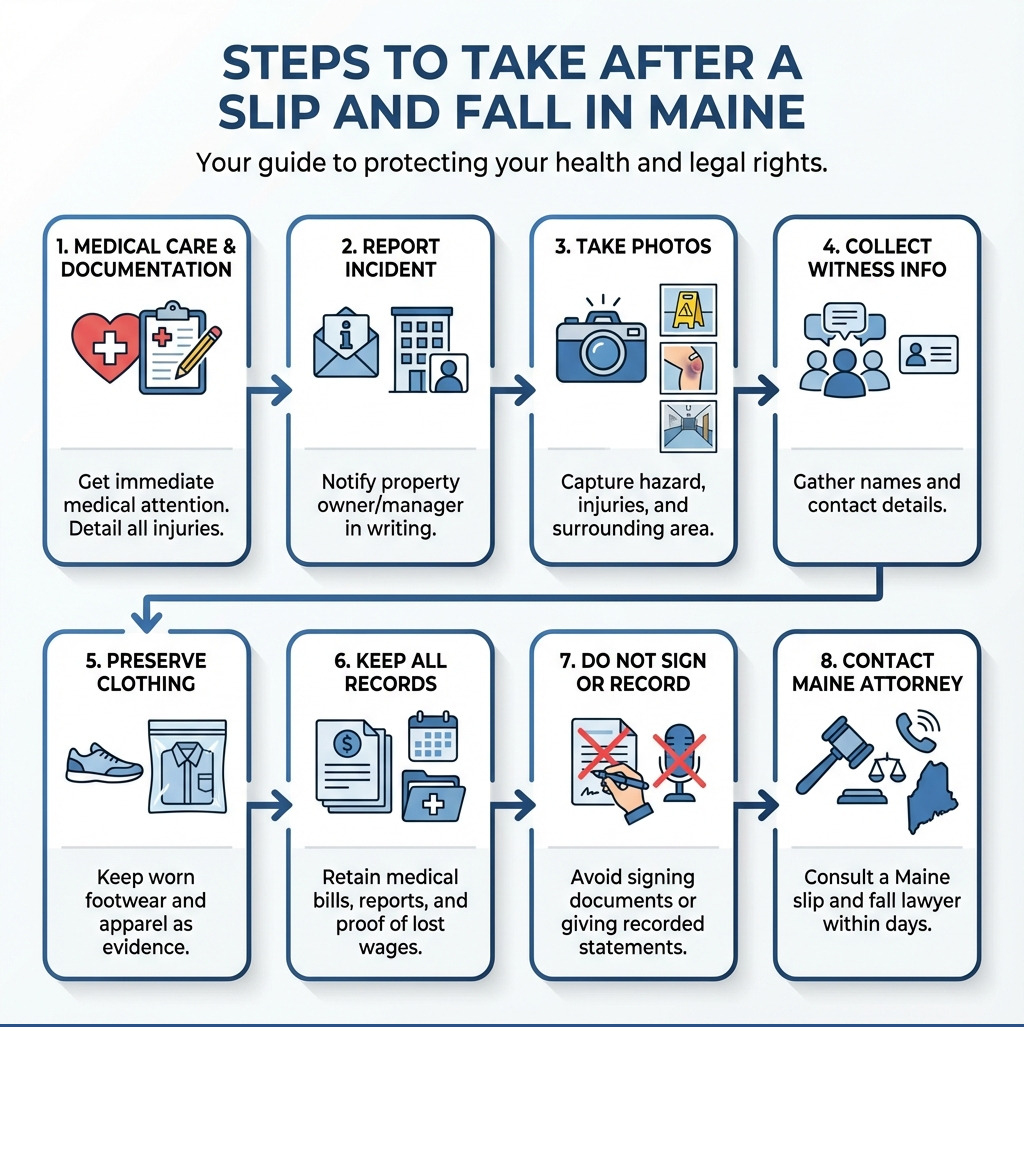
The actions you take right after a fall are crucial for your health and any potential legal claim. Follow these steps:
- Seek Immediate Medical Attention: Your health is the priority. A medical evaluation creates an official record linking your injuries to the fall.
- Report the Incident: Inform the property owner or manager right away. Ask for a copy of the incident report, but don’t minimize your pain or make excuses.
- Document the Scene: Use your phone to take photos and videos of the specific hazard that caused your fall and the surrounding area before it’s cleaned up or changed.
- Collect Witness Information: If anyone saw you fall, get their names and contact information. Their testimony can be invaluable.
- Preserve Footwear and Clothing: Keep the shoes and clothes you were wearing as potential evidence.
- Avoid Giving Recorded Statements: Politely decline to give recorded statements or sign documents for the property owner or their insurer until you’ve spoken with a slip and fall attorney.
- Keep Detailed Records: Maintain a file of all medical bills, receipts, and proof of lost wages.
These steps help gather the Types of Evidence You Need to Win a Slip and Fall Accident Cases. For more details, see What to Do If You’ve Been Injured on a Business Property.
How a Slip and Fall Attorney Assesses Your Claim’s Value
One of the first questions after an injury is, “How much is my case worth?” A skilled slip and fall attorney assesses several factors to determine your claim’s potential value.
First, your attorney reviews the evidence to confirm the property owner was negligent and their negligence caused your injuries. The value of a claim is then influenced by:
- Severity of Injury: More severe injuries lead to higher compensation. Common slip and fall injuries include fractures, head injuries (concussions, TBIs), spinal cord damage, and serious soft tissue injuries.
- Medical Expenses: This includes all past and future costs for treatment, rehabilitation, and medication.
- Lost Wages and Earning Capacity: Compensation for income lost while recovering and any future loss of earning ability.
- Pain and Suffering: This non-economic damage covers the physical pain and emotional distress caused by the injury and its impact on your life.
- Other Expenses: Any out-of-pocket costs related to your injury, like transportation to appointments.
Compensation, or damages, is typically divided into two categories:
- Economic Damages: Tangible financial losses like medical bills and lost wages.
- Non-Economic Damages: Intangible losses like pain and suffering and loss of enjoyment of life.
Your attorney will gather all necessary documentation to build a comprehensive picture of your losses. To learn more about your rights, you can explore whether Can You Sue for a Slip and Fall?.
The Legal Process: Deadlines and Procedures in Maine
Navigating the legal process in Maine requires understanding strict deadlines and procedures. Missing a deadline can mean forfeiting your right to compensation.
Statute of Limitations in Maine: For most slip and fall accidents on private property, you have a six-year statute of limitations to file a lawsuit. However, it’s best to act quickly while evidence is fresh.
Claims Against Government Entities: If your fall occurred on government property (e.g., a public park or sidewalk), the rules are much stricter. Under the Maine Tort Claims Act, you must provide a written notice of claim within 180 days of the accident. Failure to do so can bar your claim.
Contingency Fees Explained: Most reputable slip and fall attorneys in Maine work on a contingency fee basis. This means you pay no upfront fees. The attorney’s fee is a percentage of the compensation they recover for you. If you don’t win, you owe nothing for their legal services.
The Settlement Process: Most cases follow these steps:
- Investigation: Your attorney gathers evidence and builds your case.
- Demand Letter: A formal demand for compensation is sent to the at-fault party’s insurer.
- Negotiations: Your attorney negotiates with the insurance company for a fair settlement. Most cases are resolved at this stage.
- Litigation: If a fair offer isn’t made, a lawsuit may be filed to take the case to trial.
Medical experts are often used to provide testimony on the extent of your injuries and future care needs. Slip and fall cases have unique complexities that require specialized knowledge.
Taking the Next Step: Securing Your Legal Representation
After a slip and fall accident, the decision to hire a slip and fall attorney is one of the most important steps you can take. Securing expert legal representation ensures that your rights are protected and that you have a strong advocate fighting for your future.
Why Hiring a Slip and Fall Attorney Is Crucial for Your Case
If your injuries are serious or liability is disputed, hiring an experienced slip and fall attorney is essential. Here’s why:
- Proving Liability is Complex: Property owners and their insurers often blame the victim. An attorney knows how to investigate the incident, gather evidence, and build a strong case proving the owner’s negligence. Learn more about Who is Responsible for a Slip and Fall Accident?.
- Evidence Can Disappear: The sooner you hire a lawyer, the better. They can act quickly to preserve crucial evidence like surveillance footage and maintenance logs before it is lost or destroyed.
- Meeting Strict Deadlines: An attorney ensures all paperwork is filed correctly and on time, protecting you from missing Maine’s strict statute of limitations or the 180-day notice period for government claims.
- Maximizing Compensation: Insurance companies aim to minimize payouts. An attorney understands the full value of your claim—including future medical costs and pain and suffering—and will negotiate aggressively for a fair settlement.
- Leveling the Playing Field: An attorney acts as your advocate against large insurance companies, protecting you from their tactics and allowing you to focus on your recovery.
For more on this topic, read Should I Get a Lawyer if I Was Injured on Someone Else’s Property?.
Navigating Complexities: Insurance, Evidence, and Special Cases
Slip and fall cases involve legal complexities that a skilled slip and fall attorney is equipped to handle.
Dealing with Insurance Companies: Insurers use various tactics to deny or devalue claims, such as questioning your injuries or offering a quick, low settlement. Your attorney will handle all communications, present a compelling case backed by evidence, and fight for the compensation you need.
Maine’s Comparative Negligence Rule: Maine follows a rule where your compensation can be reduced by your percentage of fault. If you are found 50% or more at fault, you are barred from recovering any damages. An attorney is critical for arguing against unfair allocations of blame.
Effect of Warning Signs: A “Wet Floor” sign doesn’t automatically clear a property owner of liability. An attorney will investigate if the sign was visible and appropriate, and if the owner still failed to fix the hazard in a reasonable time.
Specific Challenges for the Elderly: Seniors are at a higher risk for severe injuries from falls, like hip fractures, which can drastically impact their independence. An attorney understands these unique challenges and will fight arguments that injuries were due to age, ensuring elderly clients are fairly compensated. This is especially relevant given Navigating Winter Hazards – Understanding Slip and Fall Injuries and Prevention.
At Hardy Wolf & Downing, our personal injury law firm offers empathetic and expert legal representation. We are committed to fighting for our clients’ justice and compensation to help them reclaim their lives. We proudly serve communities across Maine, including Portland, Lewiston, and Augusta.
If you or a loved one has been injured in a slip and fall, don’t face the legal battle alone. Contact us for a free consultation on your slip and fall accident case today.