

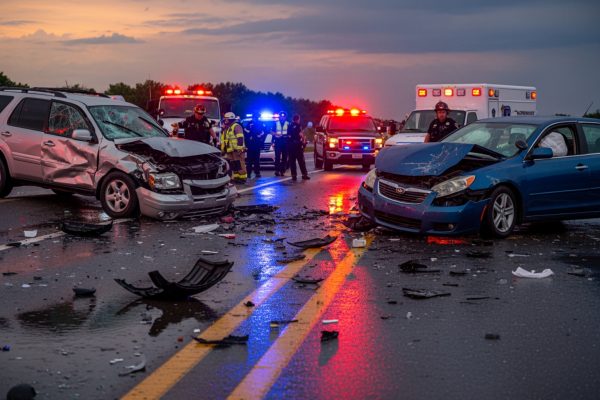
Understanding the Two Paths After an Accident
Body injury and property damage claims are two distinct legal paths after a car accident, each with its own rules and potential compensation. For Maine residents, understanding these differences is critical for navigating the aftermath of a collision.
Quick Answer: The Key Differences
| Aspect | Bodily Injury Claims | Property Damage Claims |
|---|---|---|
| What’s Covered | Medical bills, lost wages, pain and suffering | Vehicle repairs, replacement costs, rental cars |
| Complexity | High – requires medical documentation and future projections | Lower – based on repair estimates and vehicle value |
| Timeline | Months to years (must reach Maximum Medical Improvement) | Days to weeks |
| Legal Help | Strongly recommended | Often manageable without attorney |
| Settlement Amounts | Typically much higher | Usually $3,000-$10,000+ depending on damage |
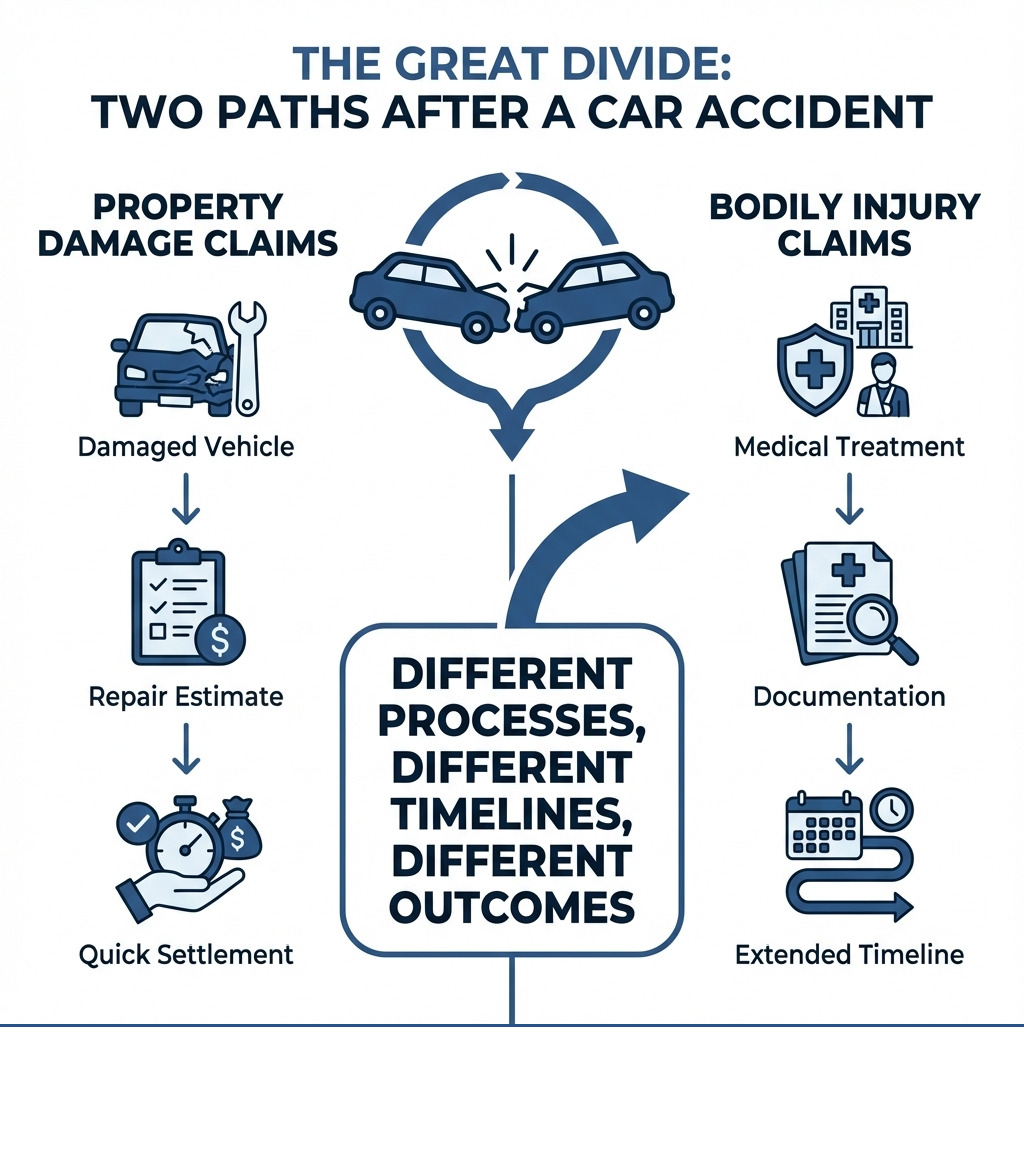
After a car accident in Maine, you will likely have two separate claims: one for property damage and one for bodily injury.
Property damage claims cover your vehicle and belongings. They are usually straightforward: a body shop provides an estimate, and the insurance company pays for repairs or the vehicle’s cash value if it’s totaled. These claims often resolve in days or weeks.
Bodily injury claims are more complex, covering medical treatment, lost income, and pain and suffering. They cannot be settled until you reach Maximum Medical Improvement, a process that can take months or years. Insurance adjusters work to minimize these payouts, making the process challenging.
The distinction between these claim types directly affects your legal strategy, timeline, and potential recovery.
Navigating Claims for Body Injury and Property Damage in Maine
Car accidents can be jarring, leaving you with a whirlwind of questions about what comes next. For those in Maine, understanding the distinct paths of body injury and property damage claims is essential. While both stem from the same incident, they diverge significantly in what they cover, how they’re processed, and the challenges you might face.
The fundamental difference lies in what each claim seeks to compensate. Property damage claims focus on the “things” that were harmed – your vehicle and belongings. Bodily injury claims concentrate on the “people” affected – the physical, emotional, and financial toll of injuries. This distinction shapes every step of the claims process.
What’s Covered in Bodily Injury vs. Property Damage Claims?
When an accident occurs, your immediate concerns are likely your physical well-being and the state of your vehicle. The types of expenses covered under body injury and property damage claims directly address these concerns, but with crucial differences.
Bodily Injury (BI) Claims: Covering the Human Element
Bodily injury (BI) claims compensate for the physical and psychological harm from an accident. In Maine, a BI claim can cover:
- Medical Expenses: All costs from emergency care to long-term rehabilitation, including future medical needs.
- Lost Wages: Compensation for income lost while unable to work, including diminished future earning capacity if the injury is permanent.
- Pain and Suffering: Non-economic damages for physical pain, emotional distress, and loss of enjoyment of life. This is subjective and requires careful valuation.
- Legal Fees: Attorney’s fees are typically a percentage of your settlement, so you don’t pay upfront.
- Funeral Costs: In fatal accidents, claims can cover funeral and burial expenses.
If you are at fault, your BI liability coverage pays for the other party’s injuries. Your own medical bills are covered by your Personal Injury Protection (PIP), Medical Payments (MedPay), or health insurance.
Property Damage (PD) Claims: Restoring Your Possessions
Property damage (PD) claims cover tangible assets damaged in an accident. These are generally more straightforward as losses are easier to quantify.
Common PD claims cover:
- Vehicle Repair Costs: The cost to fix your vehicle based on an adjuster’s assessment and a body shop’s estimate.
- Vehicle Replacement (Actual Cash Value – ACV): If your vehicle is “totaled,” the insurer pays its pre-accident market value (ACV), considering its age, mileage, and condition.
- Diminished Value: In Maine, you may claim compensation for the reduction in your vehicle’s market value even after it has been repaired.
- Rental Car Reimbursement: Covers the cost of a rental car while yours is unavailable, if included in your policy or covered by the at-fault party’s insurance.
- Damage to Other Property: This can include personal items inside your car or other property like a fence or mailbox.
Your PD liability coverage pays for damage you cause to others’ property. Damage to your own car is covered by your collision or comprehensive insurance.
The Claims Process: Timelines and Complexity
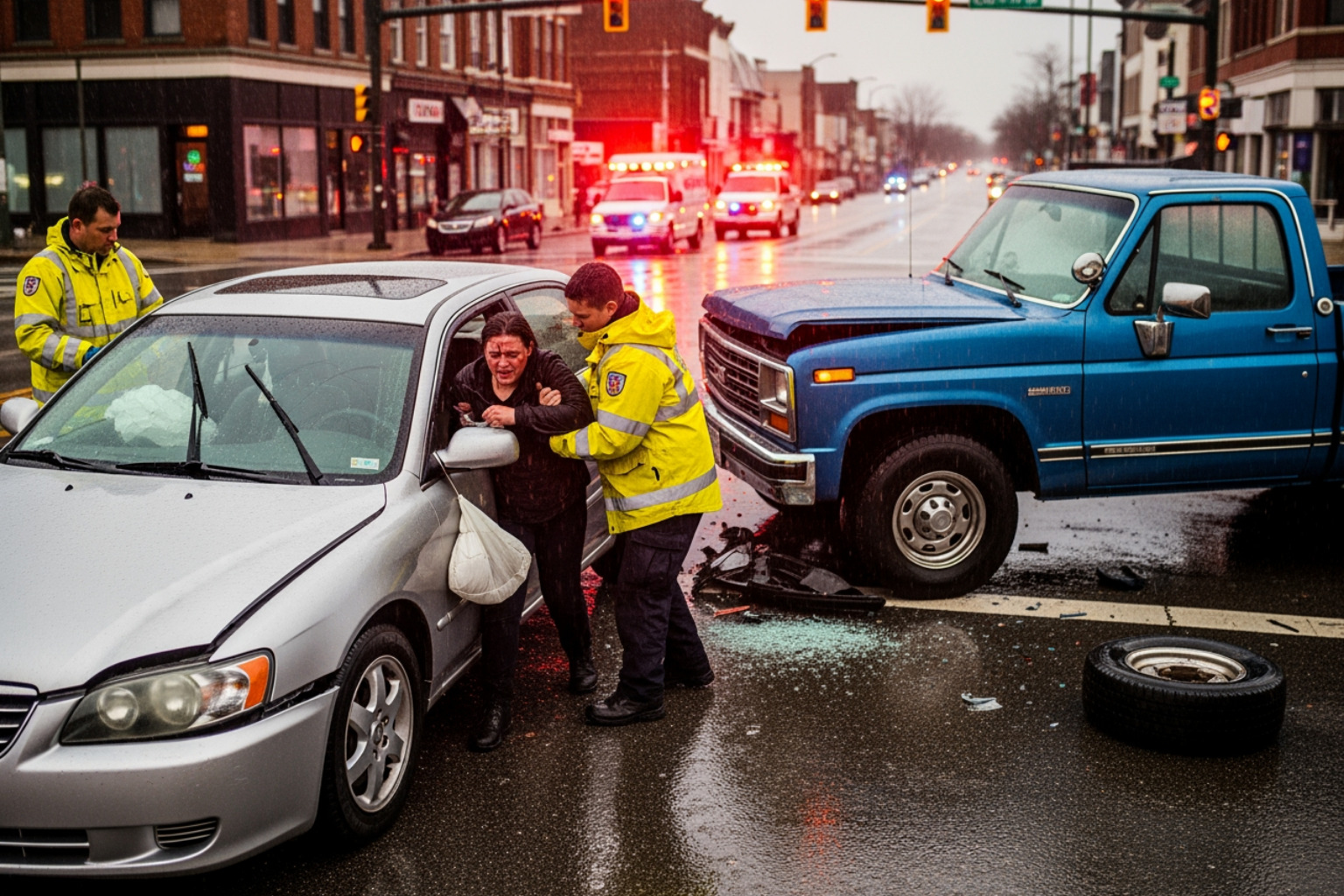
The path to resolution differs greatly for property damage versus bodily injury claims. Property damage claims are often quick, while injury claims require patience.
Property Damage Timeline and Process
These claims usually resolve within days or weeks. The process involves:
- Reporting: Report the accident to your insurer and exchange information.
- Assessment: An adjuster inspects the vehicle to determine repair costs or declare it a total loss.
- Resolution: The insurance company pays for repairs or the vehicle’s ACV once liability is clear.
Bodily Injury Timeline and Process
Bodily injury claims are complex and take much longer due to the nature of physical recovery.
- Medical Treatment: Your first priority is getting necessary medical care.
- Maximum Medical Improvement (MMI): A claim can’t be settled until you reach MMI—the point where your condition has stabilized. This can take months or years.
- Documentation: This is crucial and includes all medical records, bills, and proof of lost wages. Thorough records are key.
- Negotiation and Resolution: Once MMI is reached, a demand is sent to the insurer, leading to negotiations. This process can be lengthy, meaning final resolution often takes months or even over a year.
The Adjuster’s Role
In both claims, the insurance adjuster’s goal is to minimize the company’s payout. For property damage, they evaluate repair costs. For bodily injury, their role is more adversarial. They scrutinize medical records, question treatments, and may push for a quick, low settlement. Caution is advised when speaking with a bodily injury adjuster.
Here’s a comparison of the typical resolution timelines, key parties, and documentation for both types of claims:
| Aspect | Property Damage Claims | Bodily Injury Claims |
|---|---|---|
| Typical Resolution Timeline | Days to weeks | Months to years (until MMI) |
| Key Parties | Insured, At-fault driver (if applicable), Insurance adjusters, Body shops, Vehicle appraisers | Insured, At-fault driver (if applicable), Insurance adjusters, Medical providers (doctors, therapists), Legal counsel, Expert witnesses |
| Documentation Needed | Police report, Photos of damage, Repair estimates, Vehicle title/registration, Rental car receipts | Police report, Photos of injuries/accident, Medical records & bills, Proof of lost wages, Pain diary, Witness statements, Expert medical opinions |
| Primary Goal | Repair/replace damaged property, cover loss of use | Compensate for medical expenses, lost income, pain & suffering, future care |
| Settlement Triggers | Agreement on repair cost or ACV | Reaching Maximum Medical Improvement (MMI) |
Common Disputes in Body Injury and Property Damage Claims
The path to compensation is rarely smooth, and disputes can arise in both types of claims in Maine.
Property Damage Disputes
Even simple property damage claims can face issues:
- Disputed Liability: Disagreements over who was at fault can delay your claim.
- Lowball Offers: Insurers may offer less than the actual cost of repairs or your vehicle’s fair market value (ACV).
- Repair Cost Arguments: The insurer might push for cheaper, aftermarket parts or dispute your body shop’s estimate.
- Vehicle Valuation (ACV): Disputes over the ACV of a totaled car are common, with insurers often using valuation methods that result in lower offers.
- Diminished Value: Proving the amount of value your car lost after repairs can be difficult and is often contested.
Bodily Injury Disputes
Bodily injury disputes are more complex and high-stakes:
- Disputed Liability: Establishing fault is paramount, especially with Maine’s comparative negligence rules.
- Pre-existing Conditions: Insurers often try to blame your injuries on a pre-existing condition to reduce their payout.
- Necessity of Medical Treatment: Adjusters may argue that your medical care was excessive or unrelated to the accident.
- Valuing Non-Economic Damages: Placing a dollar value on pain and suffering is highly subjective and a major point of contention.
- Future Medical Needs: Projecting future medical costs for severe injuries often requires expert testimony, which insurers may challenge.
- Uninsured/Underinsured Motorists: If the at-fault driver lacks adequate insurance, your recovery may depend on your own coverage.
In Maine, personal injury actions are governed by specific statutes regarding issues like comparative negligence and statutes of limitations. Understanding these laws is crucial when facing disputes.
When to Call a Lawyer: Protecting Your Rights in Maine
Navigating the aftermath of an accident, especially when dealing with both body injury and property damage, can be overwhelming. While some situations might allow for direct negotiation with insurance companies, there are clear instances when professional legal representation becomes not just advisable, but crucial for protecting your rights and securing fair compensation in Maine.
Should I Hire a Lawyer for Property Damage?
While many property damage claims can be resolved without an attorney, legal help is beneficial in certain situations:
- Bad Faith Tactics: An insurer unreasonably delays, denies, or lowballs your claim.
- High-Value Disputes: Your vehicle is a luxury car, classic, or has a high market value where valuation disputes are significant.
- Total Loss Disagreements: You disagree with the insurance company’s valuation (ACV) of your totaled vehicle.
- Tied to a Serious Injury: Your property damage is part of an accident that also caused significant bodily injury. An attorney can handle both claims strategically.
In these cases, a lawyer can cut through red tape and negotiate effectively on your behalf.
Why Legal Counsel is Crucial for Bodily Injury
For bodily injury claims in Maine, legal representation is often essential. The stakes are high, and an experienced attorney can level the playing field against large insurance companies.
- Countering Insurance Tactics: Adjusters are trained to minimize payouts. They may question your injuries, suggest you were at fault, or push for a quick, low settlement. An attorney anticipates and counters these strategies.
- Valuing All Your Damages: Calculating non-economic damages like pain and suffering requires legal expertise to ensure you receive fair compensation for these subjective losses.
- Proving Future Needs: An attorney works with medical and financial experts to document and prove the need for future medical care and to project lost income.
- Meeting Deadlines: Maine has a strict statute of limitations for filing personal injury lawsuits. An attorney ensures all deadlines are met, protecting your right to seek compensation.
- Navigating the Legal System: A lawyer handles the complex legal procedures, from filing documents to representing you in court, allowing you to focus on your recovery.
Hardy Wolf & Downing understands the nuances of Maine’s personal injury laws. Our attorneys provide expert legal representation, fighting for our clients’ right to fair compensation so they can focus on rebuilding their lives. Our deep knowledge of Maine’s courts gives injured individuals a distinct advantage.
Your Path to Fair Compensation in Maine
Understanding the difference between body injury and property damage claims is the first step to protecting your rights in Maine. While you might handle a simple property damage claim alone, the high stakes of a bodily injury claim almost always require an experienced personal injury attorney.
Fair compensation should cover your immediate bills and the long-term impact on your health and finances. Without legal guidance, you risk accepting a low settlement that leaves you with the financial burden of an accident you didn’t cause.
Don’t steer the complex world of insurance claims alone. For those in Maine seeking to understand their options after an accident, the dedicated attorneys at Hardy Wolf & Downing are ready to help. We bring expertise and advocacy to communities across the state during challenging times.
To learn more about how Hardy Wolf & Downing handles personal injury cases and how they can assist you, visit their dedicated page: Learn more about how we handle personal injury cases.