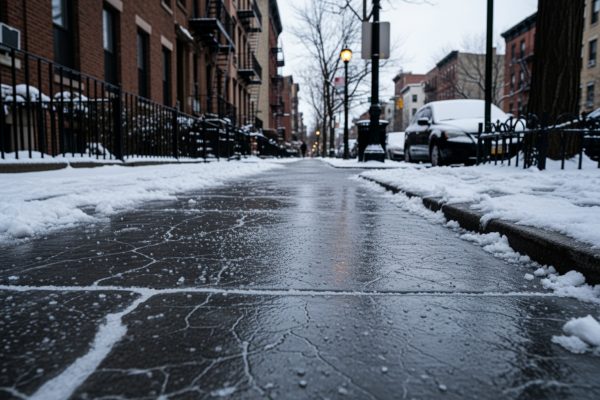
The Dangers of Icy Surfaces and Your Rights in Maine
Last updated on March 19th, 2026 at 01:50 pm
A slip and fall on ice can happen in an instant, leaving you with serious injuries, medical bills, and questions about your legal rights. If you were injured on someone else’s property in Maine, you may be entitled to compensation.
Quick Answer: What to Know About Slip and Fall on Ice Claims in Maine
- Property owners must maintain safe conditions – Homeowners, landlords, and businesses have a legal duty to keep walkways reasonably clear of ice and snow.
- You may recover compensation – Medical bills, lost wages, pain and suffering, and other damages may be recoverable.
- Maine uses comparative negligence – You can still recover damages even if you were partially at fault, as long as you’re less than 51% responsible.
- Time limits apply – Maine’s statute of limitations requires you to file your claim within a specific timeframe.
- Evidence is critical – Photos of the scene, witness statements, and medical records strengthen your case.
Winter in Maine creates serious hazards like black ice, a nearly invisible layer of ice that makes surfaces treacherous. These falls are a leading cause of severe injuries, including head trauma and broken hips.
Common injuries from slipping on ice include:
- Broken bones (wrists, hips, ankles)
- Spinal compression fractures
- Concussions and traumatic brain injuries
- Torn ligaments and muscle strains
- Back and neck injuries
Under Maine premises liability law, property owners must maintain their property in a reasonably safe condition. This includes clearing ice and snow from walkways and parking lots. If they knew or should have known about a dangerous condition but failed to take reasonable steps to fix it, and you get hurt, they may be held legally responsible.
Proving Fault in a Maine Slip and Fall on Ice Case
To recover compensation for a slip and fall on ice in Maine, you must prove the property owner was negligent. This revolves around their “duty of care” to keep their premises reasonably safe for visitors. This duty includes taking “reasonable action” to remove or treat ice and snow on walkways and parking lots. Reasonable action means acting as a prudent person would, such as inspecting the property, clearing hazards after a storm, and applying sand or ice melt.
To prove negligence, you must show:
- Duty: The property owner owed you a duty of care.
- Breach: They breached this duty by failing to reasonably address the ice or snow. This means they knew or should have known about the hazard and did nothing.
- Causation & Damages: Their failure directly caused your fall and resulted in verifiable damages.
Hazards like black ice are particularly dangerous because they are hard to see. Property owners are expected to anticipate conditions that create black ice, such as where water refreezes. A failure to treat these areas can strengthen a negligence claim.
Proving negligence is complex and requires a solid understanding of Maine’s laws. For more details, see How Do You Prove Negligence in a Slip and Fall?.
Maine’s Laws on Snow and Ice Removal
Maine law on snow and ice removal is based on a property owner’s general duty of “reasonable care.” This standard requires property owners to act reasonably to prevent foreseeable harm from icy conditions, as Maine law does not shield owners from liability simply because an accumulation of ice or snow is ‘natural.’
This means if ice or snow creates a hazard on a property in Bath or Bethel, the owner must address it in a reasonable time. What’s “reasonable” depends on factors like the weather, property type, and foot traffic. A busy Portland commercial lot has a shorter reasonable time for clearing than a quiet residential path. This duty applies to all publicly accessible areas. Failure to inspect and clear these areas can lead to a finding of negligence.
Additionally, local ordinances can impose stricter duties, such as requiring property owners to clear adjacent public sidewalks within a set time after a snowfall. Understanding these state and local rules is vital. For more information, see learn more about liability for icy surfaces and our page on Premises Liability.
The Role of Comparative Negligence in Your Claim
In Maine, your own actions can affect your slip and fall on ice claim under the doctrine of “comparative negligence.” A court will compare your degree of fault with the property owner’s.
Factors that could contribute to your fault include:
- Proceeding carelessly despite knowing the area was icy.
- Wearing inappropriate footwear for the conditions.
- Being distracted (e.g., by your phone) when you fell.
- Ignoring a clearly safer alternative path.
However, simply knowing a surface is icy doesn’t automatically make you negligent. Understanding this rule is critical for your claim. For more information, read Can You Sue for a Slip and Fall?.
Building Your Case and Seeking Compensation
After a slip and fall on ice, navigating a legal claim can feel overwhelming. Taking the right steps immediately is crucial, as Maine has a strict “statute of limitations” for filing personal injury claims. This deadline means you have a limited time from the date of your accident to take legal action, so acting promptly is essential.
Critical Steps to Take After a Slip and Fall on Ice
The moments after a fall are critical for your health and any potential legal claim. Here are the key steps and evidence to collect:
- Seek Medical Attention: Get checked by a doctor immediately, even if you feel fine. This creates an official record of your injuries.
- Report the Incident: Inform the property owner or manager and ask for a copy of the incident report.
- Document the Scene: Take photos and videos of the specific icy patch, your injuries, and the surrounding area, noting poor lighting or lack of warnings.
- Gather Witness Information: Get the names and contact information of anyone who saw you fall.
- Preserve Evidence: Keep the shoes you were wearing. Do not clean them.
- Keep Records: Save all medical bills, receipts, and documentation of lost wages.
- Avoid Social Media: Do not post about your accident or injuries online, as it could be used against you.
What Compensation Can You Recover After a Slip and Fall on Ice?
If you were injured in a slip and fall on ice due to someone’s negligence in Maine, you may be entitled to “damages” to cover your losses. Compensation can include:
- Medical Bills: Costs for all related medical care, from ER visits to physical therapy and medication.
- Lost Wages: Income lost while you were unable to work during your recovery.
- Loss of Earning Capacity: Compensation for future income you can no longer earn due to long-term disability.
- Pain and Suffering: Damages for the physical pain and emotional distress caused by your injuries and their impact on your life.
- Other Out-of-Pocket Expenses: Costs for things like transportation to medical appointments or necessary home modifications.
The amount of compensation depends on the severity of your injuries and the details of the case. See an example of a Slip and Fall Settlement Awarded – Topsham in Maine.
Why You Need a Maine Personal Injury Lawyer
Dealing with a slip and fall on ice claim is complex, especially while recovering from injuries. An experienced Maine personal injury lawyer is an invaluable asset.
Here’s why you need a legal advocate:
- Navigating Complex Laws: A skilled attorney understands Maine’s premises liability and comparative negligence laws and how they apply to your case.
- Dealing with Insurance Companies: Lawyers know how to negotiate with insurance companies that want to minimize payouts and will fight for the full compensation you deserve.
- Calculating Full Damages: An attorney can accurately calculate all your damages, including future medical costs and pain and suffering, to ensure you don’t settle for less than your claim is worth.
- Gathering Evidence: Your lawyer will help you collect the necessary evidence, from accident reports to expert testimony, and ensure all legal deadlines are met.
- Trial Experience: While many cases settle, having a trial-ready lawyer from a firm like Hardy Wolf & Downing often leads to better settlement offers. Hardy Wolf & Downing is a personal injury law firm in Maine that provides expert legal representation to help clients reclaim their lives.
If you’ve suffered a slip and fall on ice in Portland, Augusta, or anywhere in Maine, understanding your rights is the first step. For more information, read our guide on Navigating Winter Hazards: Understanding Slip and Fall Injuries and Prevention, and learn about our approach to slip and fall accidents.