Why Understanding Maine Accident Reporting Matters
When you’re involved in a Maine accident, knowing what to report, when to report it, and how to obtain your official crash report can make the difference between a smooth insurance claim and a legal nightmare.
Key Maine Accident Reporting Requirements:
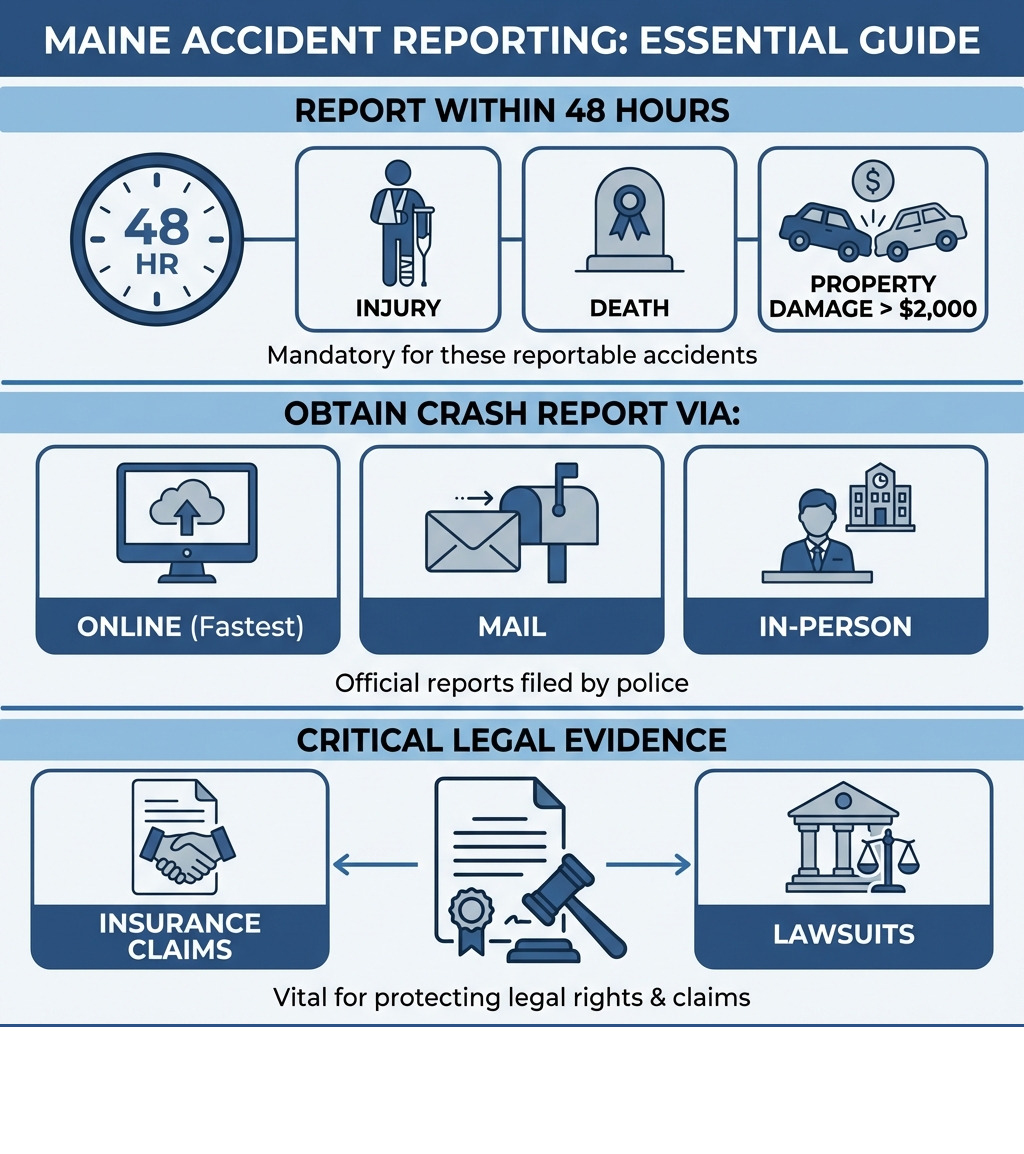
- 48-Hour Rule: You must report any accident involving injury, death, or property damage over $2,000 to the the appropriate authority within 48 hours
- Police Reports: If police respond to the scene, they’ll file the official crash report—you’ll need this for insurance and legal claims
- Report Access: You can obtain your Maine crash report online for $10 through the Maine Crash Reporting Online Search & Ordering Service, typically within 2 hours. If you retain Hardy Wolf & Downing, we’ll take care of this for you!
- Legal Timeline: Maine gives you 6 years to file a personal injury lawsuit in most cases, but waiting makes evidence harder to gather and some situations have a lesser time
The official crash report becomes critical evidence. It documents the scene, identifies contributing factors, and helps establish who was at fault. But here’s what most people don’t realize: the police narrative only tells part of the story. The numbered boxes contain crucial details about road conditions, vehicle damage, and witness statements that often get overlooked.
Maine law requires certain accidents to be reported—but knowing how to report, what gets documented, and how to read your crash report isn’t always clear when you’re dealing with injuries, insurance adjusters, and mounting medical bills.
Navigating the Maine Accident Reporting Process
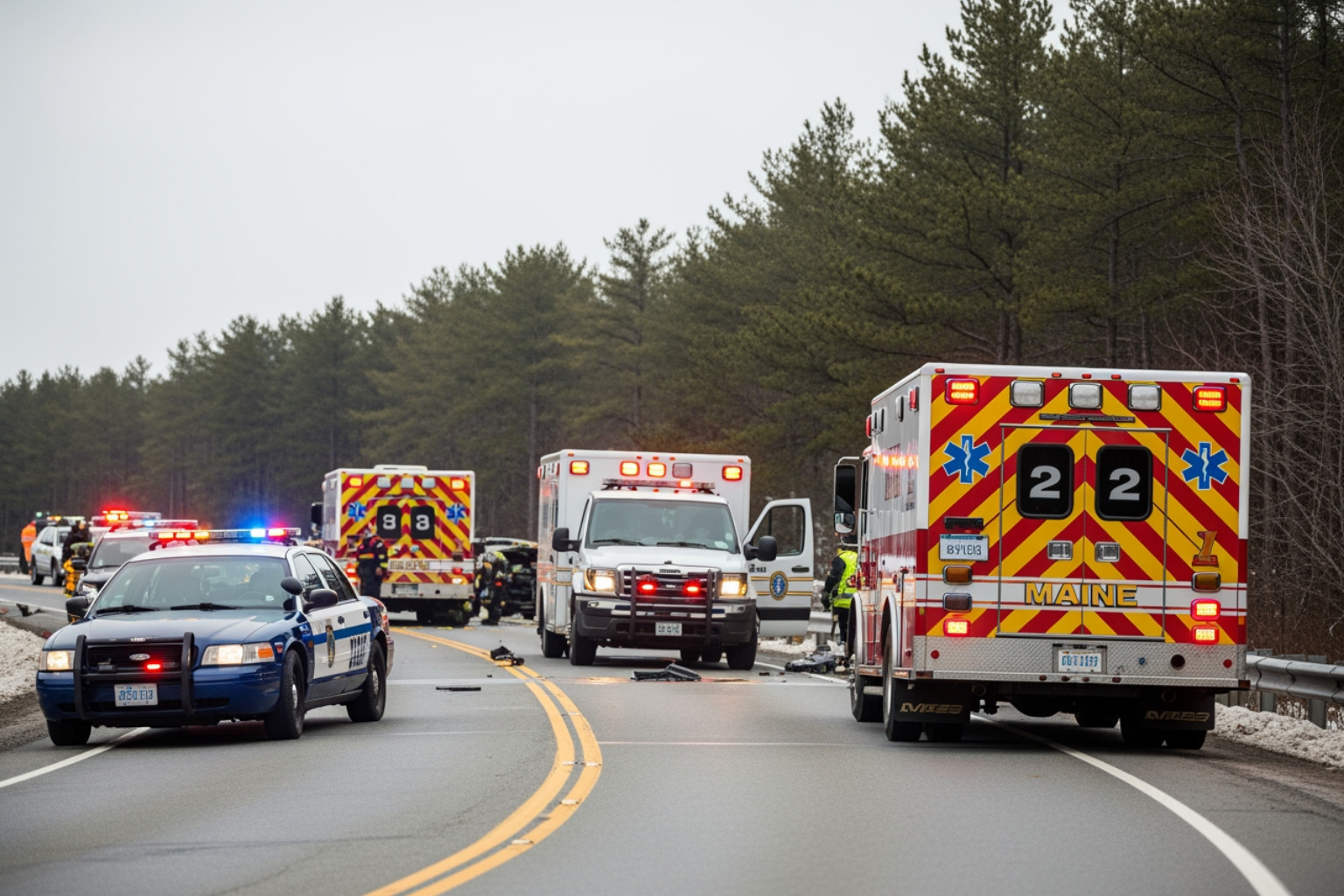
After the initial shock of a maine accident wears off, the legal clock starts ticking. In Maine, the reporting process is the foundation of any future personal injury claim. If you are in Portland, Lewiston, or anywhere in between, the steps you take at the scene and in the hours following are vital.
First and foremost is scene safety. If it is safe to do so, move vehicles out of the flow of traffic. However, if there are significant injuries, leave the vehicles as they are to allow the investigating officer to see the exact point of impact. Notifying the police is not just a good idea—it is often a legal requirement. Under Maine law, any accident resulting in bodily injury, death, or apparent property damage of $2,000 or more must be reported “by the quickest means of communication” to a law enforcement officer.
If an officer arrives at the scene, they will handle the bulk of the reporting duties. They will collect insurance information, speak to witnesses, and document the physical evidence. However, if the police do not attend the scene—perhaps because of a massive winter storm stretching resources thin—the responsibility to file a report falls squarely on the drivers involved.
| Feature | Driver Reporting Duties | Police Reporting Duties |
|---|---|---|
| Trigger | Property damage >$2,000 or any injury | Dispatched to scene or station visit |
| Timeline | Within 48 hours of the incident | Usually filed within days of investigation |
| Content | Basic info, insurance, and personal narrative | Narrative, numbered codes, and witness statements |
| Legal Weight | Required for compliance | Primary evidence for insurance & fault |
How to Obtain and Read Your Maine Accident Report
Once the dust has settled, you need the paperwork. The Maine State Police maintain a centralized database for all accidents reported since 2003. Obtaining this report is a straightforward but essential step for anyone considering a personal injury claim.
You can use the Maine Crash Reporting Online Search & Ordering Service to find your report. You will need the name and date of birth of someone involved in the crash, or the specific crash date and location. There is a $10 fee per report, and most are delivered via email within two hours. If your accident occurred before 2003, you’ll need to contact the Maine State Police Traffic Division for a manual search.
Reading the Report: More Than Just the Narrative When you receive the PDF, do not just skip to the officer’s written description at the end. While the narrative is helpful, it is often a summary. The “meat” of the report is found in the numbered boxes. These boxes use a standardized coding system to describe:
- Contributing Factors: Did a driver fail to yield? Was someone speeding?
- Vehicle Action: Was the car turning left, going straight, or stopped in traffic?
- Physical Conditions: Was the road icy, wet, or covered in slush?
If you find the codes confusing, you can download the official State of Maine Crash Reporting Guide to decode the numbers. Understanding these details is how an experienced Maine trial attorney builds a case for negligence.
Understanding Contributing Factors in Maine Crashes
To understand your own maine accident, it helps to look at the broader statistics. Data from the Bureau of Highway Safety provides a clear picture of what is actually happening on our roads from Portland to Augusta.
Between 2017 and 2021, the top contributing factor in Maine accidents was the failure to yield the right of way. This often leads to intersection collisions, which can cause severe “T-bone” injuries. Other significant factors include:
- Wildlife: Accidents involving deer accounted for 16.84% of total accidents. In Maine, hitting a deer is a constant risk, especially during the twilight hours.
- Off-Road Crashes: Going off the road was the cause of 49.10% of fatal crashes. These often involve high speeds or driver fatigue.
- DUI and Fatigue: Over 6,500 accidents involved drivers under the influence, while 4,147 involved drivers who fell asleep or were fatigued.
- Weather Complacency: Interestingly, 63.44% of accidents occurred during daylight hours in clear weather. This suggests that drivers often let their guard down when conditions seem “safe.”
For more detailed breakdowns or to see how many accidents have occurred in your specific neighborhood in South Portland or Biddeford, you can explore the Maine Crash Data Resources.
Conclusion: Protecting Your Rights After a Maine Accident
A Maine car crash can happen in the blink of an eye, but the consequences—physical, emotional, and financial—can last a lifetime. If you’ve suffered a bodily injury because of someone else’s negligence, the reporting process is your first line of defense.
Negligence in Maine is a specific legal concept. It means someone failed to act with the level of care that a reasonable person would have used in the same situation—whether that was a driver failing to yield on a slick road in Lewiston or a motorist failing to stop at a red light in Portland.
When negligence results in injury, you may be entitled to compensation for medical bills, lost wages, and pain and suffering. However, the insurance company’s goal is often to pay out as little as possible. They may use your own reporting delays or a misunderstood box on a police report against you.
Frequently Asked Questions About Maine Accident Claims
Do I have to report an accident if it happened on private property? Yes, if the accident meets the $2,000 damage threshold or results in injury, it should be reported. While police might not always issue a citation on private property, having a documented report is vital for insurance purposes.
What if the police report says I am partially at fault? Maine follows a “modified comparative negligence” rule. This means you can still recover compensation as long as you are less than 50% at fault. However, your total compensation will be reduced by your percentage of fault. This is why having an attorney to challenge inaccurate report findings is so important.
The other driver was nice and promised to pay; do I still need a report? Absolutely. “Handshake deals” at the scene of a Maine accident almost always fall apart once the other driver sees the actual cost of repairs or medical bills. Without a police report, it becomes your word against theirs.
How long do I have to decide if I want to sue? While the statute of limitations for most personal injury cases in Maine is six years, you should never wait that long. Evidence like skid marks, witness memories, and vehicle damage fades quickly.
Why Local Legal Guidance Matters
Navigating the aftermath of a crash requires more than just a lawyer; it requires a local authority who understands the specific nuances of Maine law and the local court systems in places like Portland, Auburn, and Augusta.
Hardy Wolf & Downing is a personal injury law firm that has been part of the Maine community for decades. They represent people who have suffered serious physical injuries due to negligence. They understand that a police report is just the starting point of an investigation, not the end of it.
Whether it’s interpreting the complex numbered boxes on a crash report or fighting a denied insurance claim, having an experienced Maine trial attorney on your side ensures that your story is told accurately. For More info about car accidents, or to understand how Maine’s specific laws apply to your situation, reaching out for a professional case evaluation is the best way to reclaim your life.
Key Takeaways for Maine Drivers:
- Report Immediately: Use the 48-hour rule as your absolute deadline, but sooner is always better.
- Gather Your Own Evidence: Take photos of the scene, the weather, and the vehicles before they are moved.
- Get the Official Report: Spend the $10 to get your report from the Maine Crash Reporting Online Search & Ordering Service.
- Don’t Go It Alone: If you are injured, the insurance company has a team of experts working against you. You deserve a local Maine expert working for you.
If you’re unsure whether you have a case, a short conversation with a Maine injury attorney can help clarify your options and protect your future.