

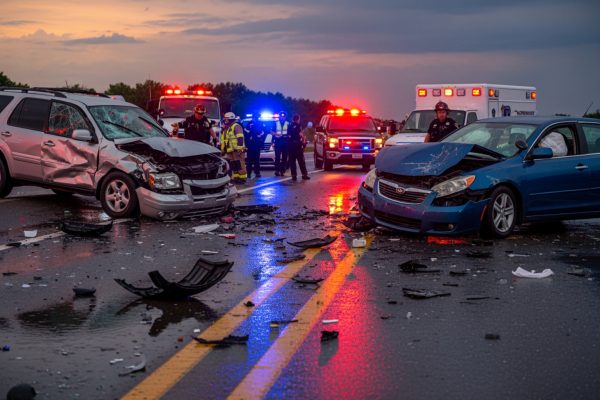
What You Need to Know About Injuries from Accidents in Maine
Injuries from accidents are one of the leading causes of hospitalization, disability, and death in Maine and across the United States. If you were recently hurt in a crash, you are not alone — and knowing what to do next matters enormously.
Here is a quick overview of the most common accident injuries and what to watch for:
| Injury Type | Common Symptoms | Urgency |
|---|---|---|
| Whiplash / Neck Sprain | Neck pain, stiffness, headaches | Seek care promptly |
| Traumatic Brain Injury (TBI) | Confusion, headaches, memory loss | Emergency if severe |
| Spinal Cord Injury | Numbness, weakness, back pain | Emergency |
| Internal Bleeding | Abdominal pain, dizziness, bruising | Emergency |
| Broken Bones / Fractures | Swelling, pain, limited movement | Seek care promptly |
| Soft Tissue Damage | Soreness, bruising, reduced mobility | Monitor closely |
| PTSD / Psychological Injury | Anxiety, sleep problems, flashbacks | Seek care promptly |
Road traffic crashes cost the U.S. an estimated $559.3 billion in 2024, with 4.9 million people sustaining medically treated injuries that year alone. Globally, road accidents claim over 100 lives every single day.
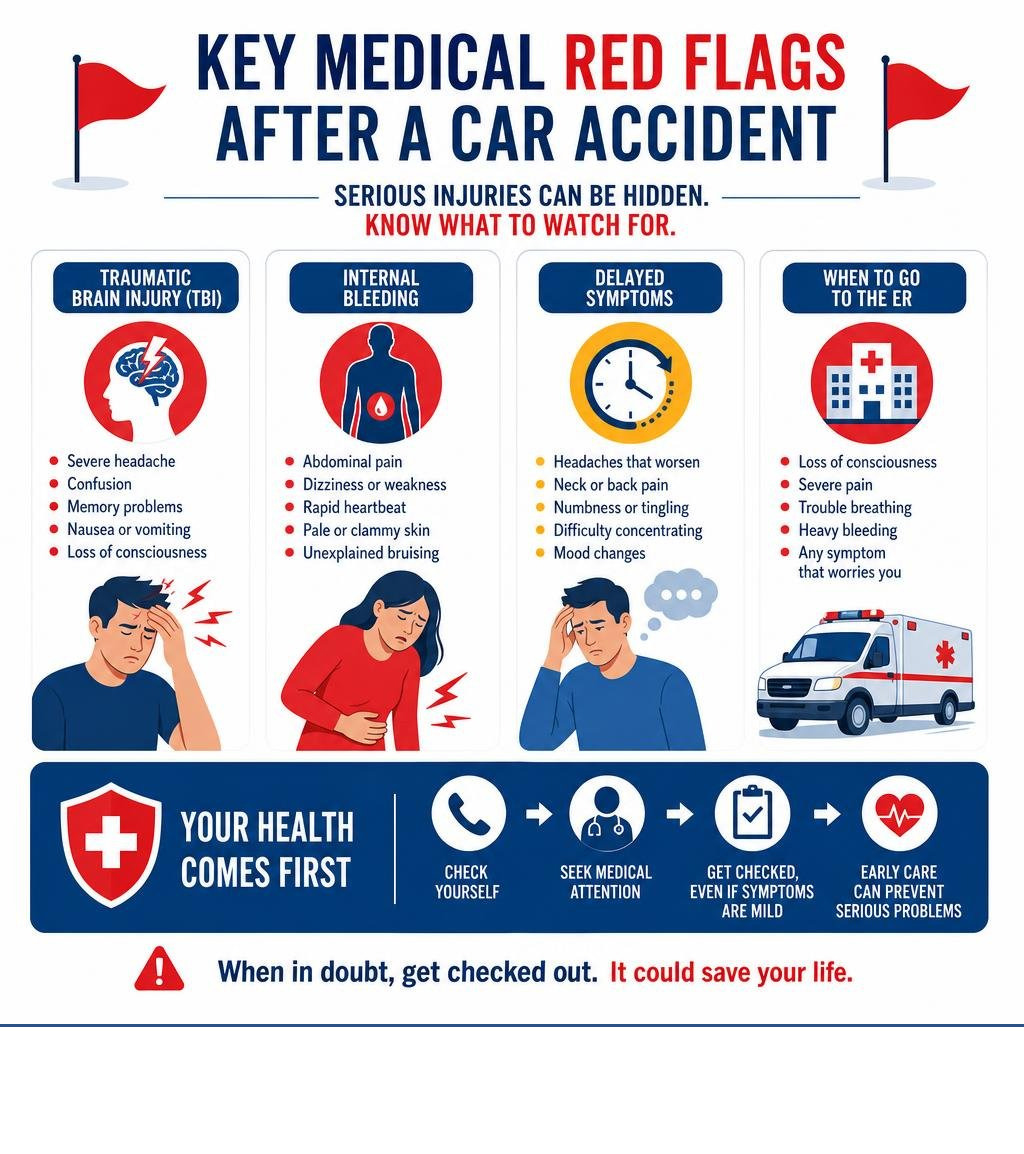
What makes accident injuries especially dangerous is that many do not show up right away. A crash that feels minor in the moment can produce serious, life-altering damage that surfaces hours or days later. Delayed symptoms — like persistent headaches, numbness, or cognitive fog — are common and can signal injuries that worsen without treatment.
In Maine, how you respond in the days immediately after a crash can affect both your health and your legal rights. Maine’s personal injury laws, including a 6-year statute of limitations and a modified comparative negligence rule, create a specific framework that injured people need to understand before dealing with insurance companies or making any legal decisions.
This guide walks you through the most common types of accident injuries, how crash dynamics and safety choices affect outcomes, and what Maine law means for your path to recovery.
Understanding Common Injuries from Accidents and Their Physical Impacts

Motor vehicle collisions subject the human body to sudden violent forces. Even at low speeds, the sudden transfer of kinetic energy places intense pressure on muscles, ligaments, bones, and internal organs.
Among vehicle occupants, soft tissue injuries are statistically the most prevalent physical outcomes. Research shows that neck sprains account for roughly 33% of all injuries sustained by car occupants in low- to moderate-severity collisions. Common types of car accident injuries in Maine range from mild cervical strain to severe structural fractures, depending on vehicle speed, impact direction, and seating position.
Different types of road users experience distinctly varied injury patterns:
- Car Occupants: Most frequently suffer neck sprains, whiplash, lumbar strains, and chest contusions caused by seat belt tension or airbag deployment.
- Motorcyclists: Face disproportionate risks to lower limbs. Studies show lower extremity trauma affects approximately 45% of injured motorcycle operators, alongside high rates of road rash and upper limb fractures.
- Pedestrians: Lower limbs (around 40.5% of cases) and head trauma are the primary anatomical areas damaged when hit by motor vehicles, often due to direct bumper contact followed by ground impact.
- Bicyclists: Experience high frequencies of upper extremity fractures, clavicle injuries, and traumatic head impacts.
Age also plays a major role in trauma severity. Older drivers aged 65 and above are up to four times more likely to sustain severe or critical injuries in a crash compared to drivers under 24. This vulnerability stems largely from age-related decreases in bone density and lower chest load tolerances. Younger drivers can typically withstand chest forces up to 8,000 Newtons, whereas older adults often suffer rib cage fractures at loads near 5,000 Newtons.
Traumatic Brain and Spinal Cord Injuries from Accidents
Head and spinal trauma represent some of the most devastating outcomes of vehicle collisions. National crash statistics indicate that motor vehicle accidents account for nearly one-fourth of all hospitalizations involving a Traumatic Brain Injury. Furthermore, head and chest injuries together account for roughly 80% of all severe, life-threatening injuries (MAIS 4+) sustained in passenger vehicle crashes.
Concussions and traumatic brain injuries occur when rapid acceleration and deceleration cause the delicate tissue of the brain to strike the inside of the skull. This motion damages nerve fibers, tears blood vessels, and triggers secondary chemical cascades. Victims often report immediate or delayed cognitive symptoms, including:
- Chronic post-traumatic headaches and dizziness
- Slurred speech and difficulty concentrating
- Sensitivity to light and lightheadedness
- Profound cognitive fatigue and mood alterations
Similarly, Spinal Cord Injuries arise from severe compression, hyper-extension, or dislocation of the thoracic, cervical, or lumbar vertebrae. Damage to spinal nerves can impair motor function, diminish sensation, and cause partial or total paralysis. Treatment often requires surgical stabilization, prolonged physical therapy, and permanent life adjustments.
Delayed Symptoms and Hidden Injuries from Accidents
Not every physical injury presents clearly at the crash scene. Adrenaline, shock, and inflammation can mask severe pain for hours, days, or even weeks after an incident. This delay emphasizes the crucial importance of seeking medical attention after an accident, regardless of initial impressions.
Two critical categories of delayed collision trauma include:
- Internal Organ Damage and Bleeding: Blunt force trauma against steering wheels, door panels, or seat belts can rupture internal blood vessels, lacerate the liver or spleen, or cause internal hemorrhaging. Symptoms such as abdominal tenderness, deep bruising, lightheadedness, and fainting may develop slowly as internal fluid pressure builds.
- Subtle Concussions and Soft Tissue Micro-tears: Whiplash and low-grade brain trauma frequently present hours later as mild neck stiffness, sleep disturbances, or delayed confusion.
Real-world crashes continuously illustrate how sudden and severe roadside incidents can be across the state. For instance, reports like a Maine man seriously injured in crash on I-95 in Waterville highlight how highway collisions on major thoroughfares frequently result in catastrophic physical trauma requiring emergency medical intervention.
Medical emergency red flags requiring immediate hospital emergency evaluation include persistent vomiting, slurred speech, unequal pupil sizes, severe numbness in extremities, or loss of consciousness.
How Crash Types and Seat Belts Influence Injury Severity
The structural dynamics of a collision directly determine where force is applied to vehicle occupants and how severely they are injured.

- Frontal Impacts: Drivers and front passengers move violently forward toward the instrument panel and steering wheel. Frontal airbags and pretensioner seat belts lessen these forces, though sternum contusions, wrist fractures, and whiplash remain frequent.
- Side Impacts (T-Bone): Offer minimal crumple space between the striking vehicle and occupants. Side-impact crashes carry elevated risks of pelvic fractures, internal organ ruptures, and lateral neck trauma.
- Rollover Crashes: Extremely violent events where occupants undergo complex rotational forces. Driver serious injury risks in vehicle rollover crashes are three times higher than in non-rollover collisions.
- Rear Impacts: Frequently cause rapid acceleration of the torso while the head lags behind, stretching cervical ligaments and making whiplash the single most common injury outcome.
Seat belt utilization remains the single most effective safety mechanism inside any motor vehicle. Engineering research demonstrates that unbelted drivers are eight times more likely to suffer serious or fatal injuries in a collision than drivers who wear seat belts. Proper belt usage reduces overall occupant mortality risk by up to 50%, acting as the primary defense against ejection and hard cabin impacts.
Navigating Maine Personal Injury Laws and Seeking Recovery
When an individual suffers injuries from accidents in Portland, Lewiston, South Portland, Auburn, Augusta, or anywhere across Maine, securing physical recovery goes hand-in-hand with understanding local legal rights. Maine statutory law governs how responsibility is established, how medical expenses are recovered, and how compensation is calculated.
Under Maine law, property owners have a clear legal duty. Property owners in Maine have a legal “duty of care” to keep their premises reasonably safe to any non-trespasser who is reasonably expected to use their property. Notably, Maine courts eliminated the old legal distinction between invitees and licensees, simplifying premises safety expectations across commercial and private lands.
By contrast, third-party contractors do not owe an independent duty to the general public unless they personally created the dangerous or hazardous condition on the property. Additionally, general premises liability standards are distinct from recreational land use statutes (14 MRSA § 159), which apply specifically to land opened for outdoor recreation.
Maine Comparative Negligence and Medical Documentation
Maine operates under a modified comparative negligence framework. Under this rule, an injured party can only recover financial damages if their share of fault for the accident is less than 50%. If the injured individual is found to be 50% or more at fault, they are legally barred from recovering any compensation whatsoever.
If the injured person’s fault is under 50%, their compensation is reduced by an amount reflecting their degree of negligence (rather than automatically dropping by a rigid percentage calculation). For example, if a jury determines an injured driver contributed minorly to a crash through slight speeding, the court will reduce the total monetary award by an amount that reflects that fault allocation.
Consistent medical documentation is essential in these situations. Insurance adjusters carefully examine emergency room notes, diagnostic imaging, physical therapy records, and treatment plans. Gaps in care or delayed medical evaluations allow insurance companies to argue that physical injuries were not caused by the crash or were exaggerated by the victim.
Statutes of Limitations and Legal Protections in Maine
Timing plays a critical role in preserving legal protection after an accident:
- General Personal Injury Statute of Limitations: In Maine, injured parties generally have six years from the date of the accident to file a personal injury lawsuit against a negligent party. Learn more about What is Maine’s statute of limitations to ensure claim deadlines are met.
- Government Claims Notice: If an injury involves a state, county, or municipal entity (such as a crash caused by a town vehicle), Maine law imposes much stricter requirements. A formal written notice of claim complying with Maine Tort Claims Act specifications must be delivered within 365 days of the injury.
- Sidewalk Immunity: It is vital to note that under Maine law, government entities carry no civil liability for injuries caused by defects or conditions on public sidewalks.
- Motor Vehicle Crash Duties: Vehicle operators involved in accidents resulting in injury or death must comply strictly with duties outlined under the Maine traffic crash statute, including immediately stopping, rendering aid, and reporting the crash to law enforcement.
Frequently Asked Questions About Accident Claims in Maine
What should I do if my accident injuries were not apparent at the crash scene?
Seek a comprehensive medical evaluation as soon as symptoms begin to manifest. Inform your medical providers that you were involved in a vehicle crash so they can document the timeline of symptoms. Prompt diagnosis creates a clear link between the crash and your physical condition, protecting both your health and insurance claims.
How does Maine’s modified comparative negligence rule affect my compensation?
As long as your share of fault is determined to be less than 50%, you remain eligible to receive financial recovery. However, the final financial award will be reduced by an amount that reflects your specific degree of responsibility for the crash.
Who pays my immediate medical bills after a car crash in Maine?
In Maine, initial medical expenses are typically submitted through your vehicle’s Medical Payments (MedPay) coverage, if included on your auto policy, or your private health insurance plan. If another driver was at fault, their liability coverage ultimately repays these costs as part of a final personal injury settlement or court judgment.
How long do I have to file an injury claim after a crash in Maine?
For claims against private drivers or businesses, Maine provides a generous six-year statute of limitations. However, if your accident involves a government vehicle or municipal entity, you must serve a formal written notice within 365 days of the crash.
Summary and Key Takeaways
- Injuries Can Be Hidden: Severe conditions like whiplash, internal organ damage, and concussions often present hours or days after an impact.
- Medical Evaluation Is Essential: Immediate diagnostic exams safeguard your personal health and establish crucial documentation for insurance reviews.
- Maine Safety and Fault Rules: Seat belts drastically lower injury severity. Under Maine’s modified comparative negligence law, you can recover damages as long as your fault is under 50%.
- Mind the Deadlines: While Maine offers a six-year statute of limitations for standard injury claims, government-related incidents carry a strict 365-day notice requirement.
If you or a loved one has suffered severe injuries from accidents due to someone else’s negligence in Portland, Lewiston, Bangor, or surrounding Maine communities, understanding your rights is the first step toward recovery. Exploring experienced Hardy Wolf & Downing accident injury representation can help provide clarity, handle insurance negotiations, and ensure you receive fair compensation while you focus on healing.

