

Navigating Maine’s Helmet Rules
Does Maine have a helmet law? Yes, but it’s a “partial helmet law,” not a universal mandate. The rules depend on your age, vehicle, and experience.
Here’s a quick summary:
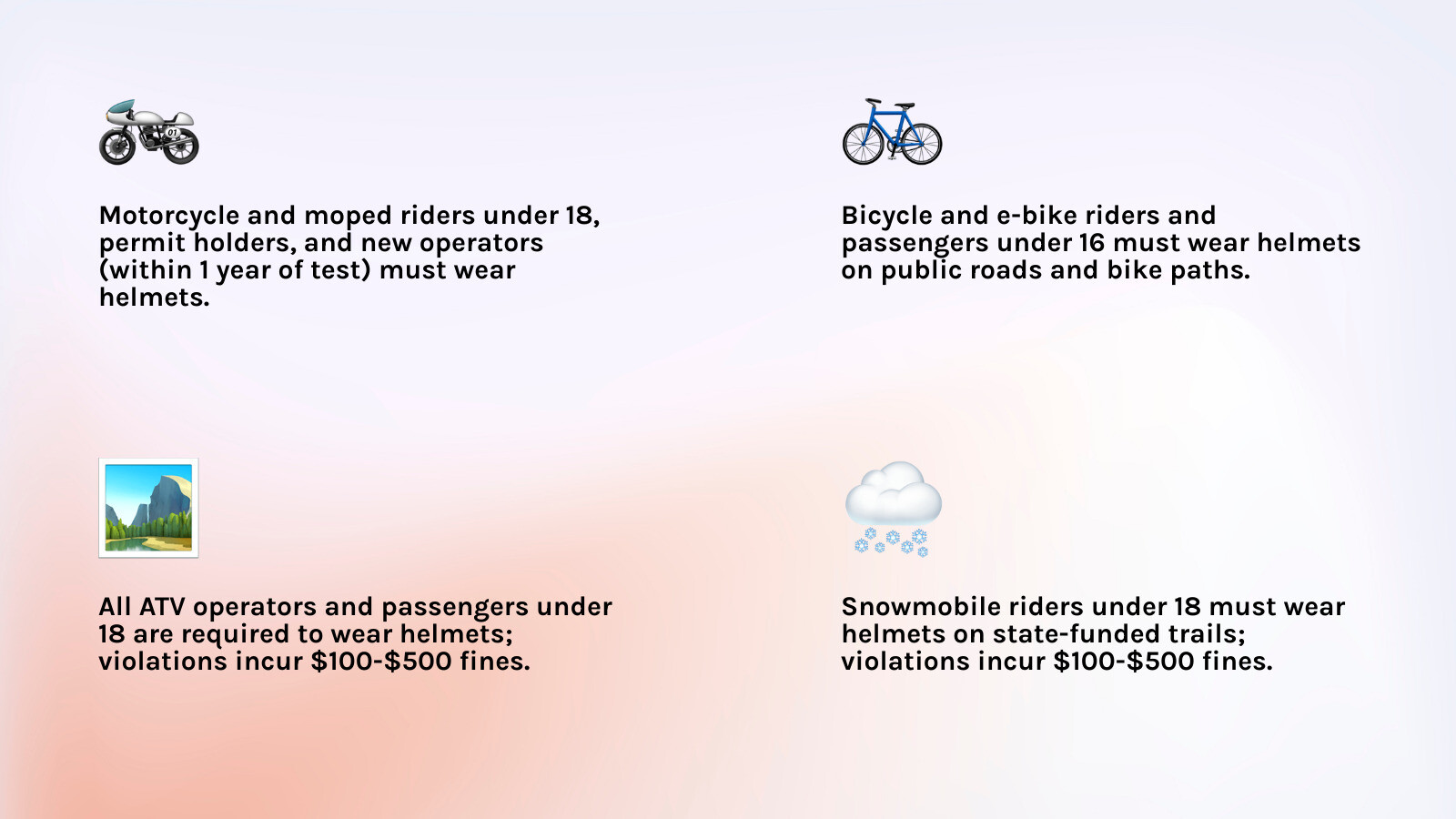
- Motorcycles/Mopeds: Required for riders under 18, those with a learner’s permit, and operators within one year of their driving test.
- Bicycles/E-Bikes: Required for riders and passengers under 16 on public roads.
- ATVs: Required for all operators and passengers under 18.
- Snowmobiles: Required for all riders under 18 on state-funded trails.
If you’ve been injured in an accident in Portland, Lewiston, or anywhere in Maine, these rules are important. Whether you wore a helmet can affect your insurance claim and legal rights. While Maine repealed its universal motorcycle helmet law in 1977, today’s laws focus on protecting younger and less experienced riders.
However, if someone else’s negligence caused your accident, you may still have a valid personal injury claim even if you weren’t wearing a helmet. Maine law treats a helmet violation and the other driver’s negligence as separate issues.
Does Maine Have a Helmet Law? A Breakdown by Vehicle
As a personal injury attorney in Maine, I clarify for clients that the state has a “partial helmet law.” Requirements vary by vehicle, age, and experience, which is a crucial distinction if you’re in an accident in Portland, Lewiston, or elsewhere in Maine.
While these rules exist, the most critical issue from a personal injury standpoint is safety. Helmets can reduce the odds of a head injury by 50 percent. When required, helmets must meet safety standards like the Federal Motor Vehicle Safety Standard (FMVSS) No. 218, often marked with a “DOT” sticker.
Motorcycle Riders: Does Maine Have a Helmet Law for You?
For motorcycles and mopeds, Maine law focuses on protecting younger and less experienced riders. While there is no universal mandate for all adults, protective headgear is required for specific groups.

Who is required to wear a helmet on a motorcycle in Maine? Under Title 29-A, §2083: Protective headgear, the following individuals must wear a helmet:
- Operators and Passengers Under 18: Anyone under 18 on a motorcycle, moped, or in a sidecar.
- Learner’s Permit Holders: All operators riding with a learner’s permit.
- Newly Licensed Operators: Operators within one year of passing their motorcycle driving test.
- Passengers of Required Operators: If the operator must wear a helmet, so must their passenger, regardless of the passenger’s age.
The law requires helmets to meet federal safety standards (FMVSS No. 218), identifiable by a “DOT” sticker. The only exemption is for operators of autocycles, which are three-wheeled vehicles with an enclosed cabin.
Safety and Personal Injury Implications The risk of serious physical injury is the greatest concern in any accident. As personal injury attorneys, we’ve seen the devastating impact of head injuries. We strongly encourage all riders to wear a DOT-approved helmet, as helmet use reduces the risk of head injury by 50 percent.
Bicyclists and E-Bike Riders: What Are the Rules?
For cyclists on the roads of Portland or Lewiston, Maine’s helmet law is focused on protecting children. There is no universal helmet law for all bicyclists.

Who is required to wear a helmet on a bicycle in Maine? Maine law (29-A MRS §2323) requires any person under 16 to wear a helmet when operating or riding as a passenger on a bicycle or electric bicycle. This applies to public roads and bikeways. The helmet must be properly fitted and fastened to be effective.
Passengers of bicycle taxis are exempt. The risk of a head injury is the real concern, which is why we recommend all cyclists wear a helmet for safety.
What About ATVs and Snowmobiles?
Maine’s helmet laws also cover recreational off-road vehicles to improve safety.
Who is required to wear a helmet?
- ATVs: All operators and passengers under 18 must wear protective headgear.
- Snowmobiles: All operators and passengers under 18 must wear protective headgear on trails funded by the Snowmobile Trail Fund.
After an Accident: Understanding Your Rights in Maine
Even with safety precautions, accidents happen. If you’ve suffered a serious physical injury in Maine from a motorcycle, bicycle, or ATV accident caused by someone else’s negligence, it’s critical to understand your rights. A personal injury claim is about seeking compensation for bodily harm caused by another’s carelessness.
Not wearing a helmet, especially if not legally required, does not automatically bar you from filing a claim. However, if a helmet was required, it could affect compensation for a head injury under Maine’s comparative negligence rule. Navigating these claims is complex, and insurance companies often aim to minimize payouts. An experienced Maine personal injury attorney from a firm like Hardy Wolf & Downing can protect your rights in Portland, Lewiston, and throughout the state.
Frequently Asked Questions About Helmet Laws and Injury Claims
Here are answers to common questions we hear:
Do I have a case if I wasn’t wearing a helmet? Yes, you may still have a case. The other driver’s negligence is a separate issue. However, if a helmet was legally required and you suffered a head injury, the defense may argue your failure to wear one worsened your injuries. This could reduce your compensation for the head injury but does not automatically void your claim.
What if I was only partially at fault? Maine uses a modified comparative negligence rule. You can recover damages if you are 50% or less at fault, but your award is reduced by your percentage of fault. If you are more than 50% at fault, you cannot recover anything.
How long do I have to file an injury claim in Maine? The statute of limitations for most personal injury claims in Maine is six years from the accident date. However, some claims have much shorter deadlines, so seek legal advice promptly.
Does violating the helmet law affect my insurance claim? It can. If you were required to wear a helmet and didn’t, an insurance company may argue to reduce compensation for a head injury. It does not, however, negate the other party’s liability for causing the accident or for your other injuries.
What should I do immediately after an accident in Portland?
- Seek Medical Attention: Get checked out, even if you feel fine.
- Report the Accident: Call the police to create an official report.
- Gather Information: Collect contact/insurance details and take photos.
- Do Not Admit Fault: Avoid statements that could be used against you.
- Contact an Attorney: Speak with a personal injury lawyer in Portland or Lewiston before dealing with insurance companies.
Key Takeaways
- Does Maine have a helmet law? Yes, a partial law, not a universal one.
- Requirements vary by vehicle type (motorcycle, bicycle, ATV) and the rider’s age or experience.
- Motorcycle rules apply to riders under 18, new drivers, and permit holders.
- Bicycle helmet rules apply to anyone under 16 on public roads.
- ATV/snowmobile laws require helmets for all riders under 18.
- Not wearing a helmet doesn’t automatically prevent an injury claim, though it may affect compensation for head injuries.
- Helmets offer profound safety benefits, significantly reducing the risk of serious head injury.
When to Speak with an Attorney
Knowing Maine’s helmet laws is important, but understanding your legal options after an accident is vital. If you or a loved one suffered serious physical injuries due to someone else’s negligence, the complexities of the law and insurance claims can be overwhelming.
At Hardy Wolf & Downing, we offer expert legal representation to help clients in Maine reclaim their lives. If you’re unsure whether you have a case, a conversation with a Maine injury attorney can clarify your situation.
Contact our Portland, Maine injury lawyers today for a free consultation. We are here to help you steer these challenging times.

