


The Devastating Reality of Head-On Collision Injuries
Head-on collision injuries are among the most catastrophic outcomes of any traffic accident. When two vehicles strike each other front-to-front, the combined forces create an impact far more severe than hitting a stationary object.
Key facts about head-on collisions:
- High Fatality Rate: Though rare, they account for 14% of U.S. traffic fatalities annually.
- Severe Injuries: Common injuries include traumatic brain injuries (TBI), spinal cord damage, and internal organ damage.
- Speed is Critical: Survival chances decrease dramatically at speeds above 43 mph (70 km/h).
- Rural Roads are High-Risk: A staggering 83% of these crashes occur on rural roads.
The physics behind these crashes explains their severity. Due to immense kinetic energy and sudden deceleration, occupants are subjected to extreme trauma. The consequences often extend beyond physical injuries to include chronic pain, permanent disability, and psychological trauma like PTSD. Medical bills mount, work becomes impossible, and families face a new, challenging reality.
This guide explains the full scope of head-on collision injuries, the recovery process, and your legal rights to secure fair compensation.
The Physics and Immediate Impact of a Head-On Collision
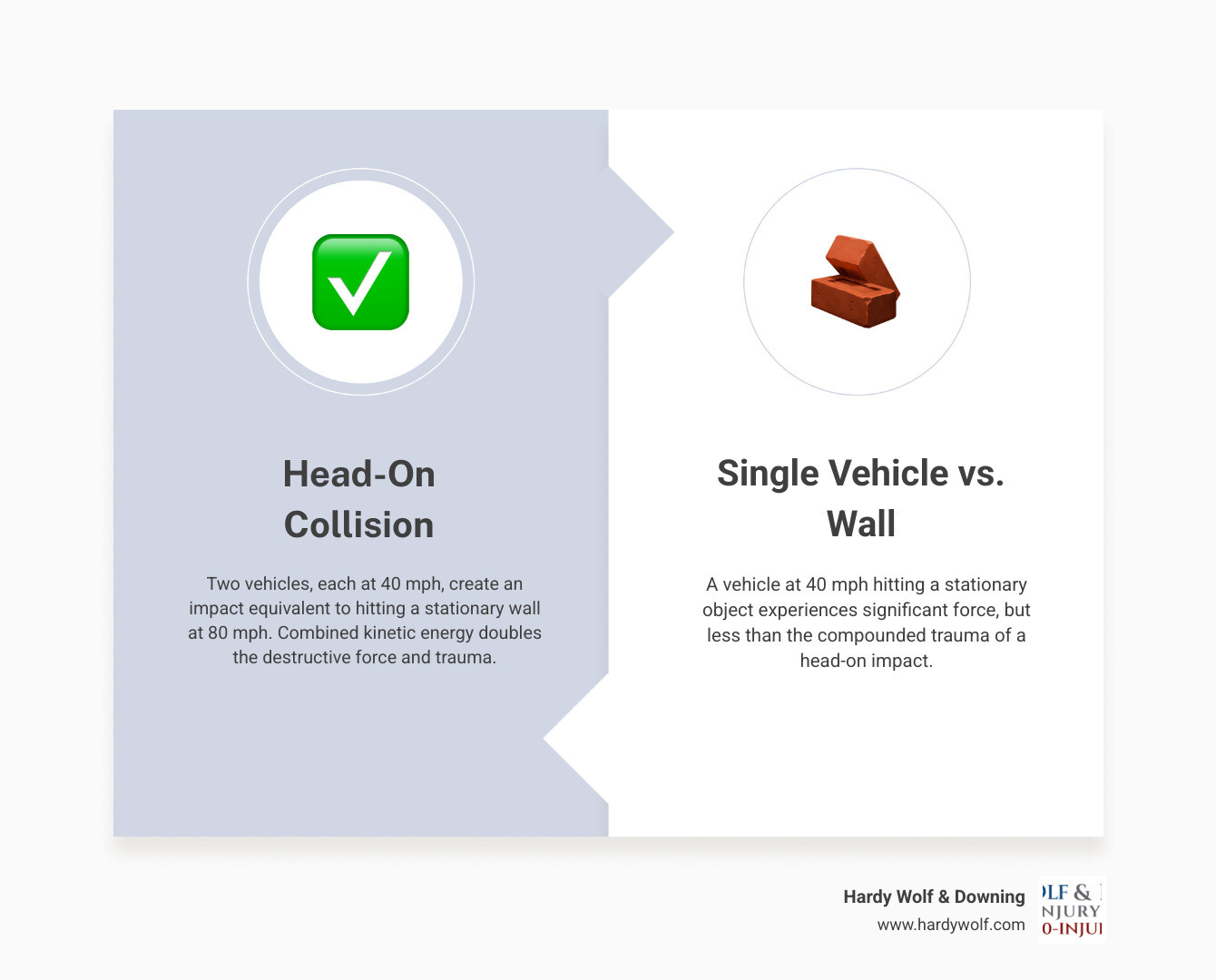
Understanding why head-on collision injuries are so devastating requires looking at the physics at play. The severity comes down to combined forces and kinetic energy, which increases exponentially with speed. When two cars traveling at 40 mph collide head-on, the impact force is equivalent to hitting a solid wall at 80 mph.
Newton’s First Law of Motion dictates that even after the vehicle stops, your body continues moving forward until stopped by a seatbelt, airbag, or the dashboard. This sudden, violent deceleration subjects your body to immense trauma. While modern vehicles have crumple zones to absorb crash energy, the overwhelming forces in a head-on crash often exceed their protective capabilities.
How Speed, Size, and Safety Features Influence Injuries
Several factors determine the severity of injuries:
- Speed: Because kinetic energy quadruples when speed doubles, higher speeds are exponentially more dangerous. Survival chances drop dramatically above 43 mph, as detailed in our article on 3 Dangerous Types of Car Accidents.
- Vehicle Size Disparity: When a smaller car collides with a larger truck or SUV, the occupants of the lighter vehicle face far more severe injuries. The larger vehicle’s mass and momentum transfer a disproportionate amount of energy, often crushing the smaller car. You can learn more about how different scenarios affect injuries on our Car Accidents page.
- Safety Features: While seatbelts and airbags are essential lifesavers, the extreme forces of a head-on collision mean they can also cause injuries. Seatbelts can cause bruised ribs and internal organ damage, while rapidly deploying airbags can cause burns, facial fractures, and concussions. However, these injuries are vastly preferable to the near-certain fatality of being ejected or hitting the vehicle’s interior.
Common Types of Head-On Collision Injuries
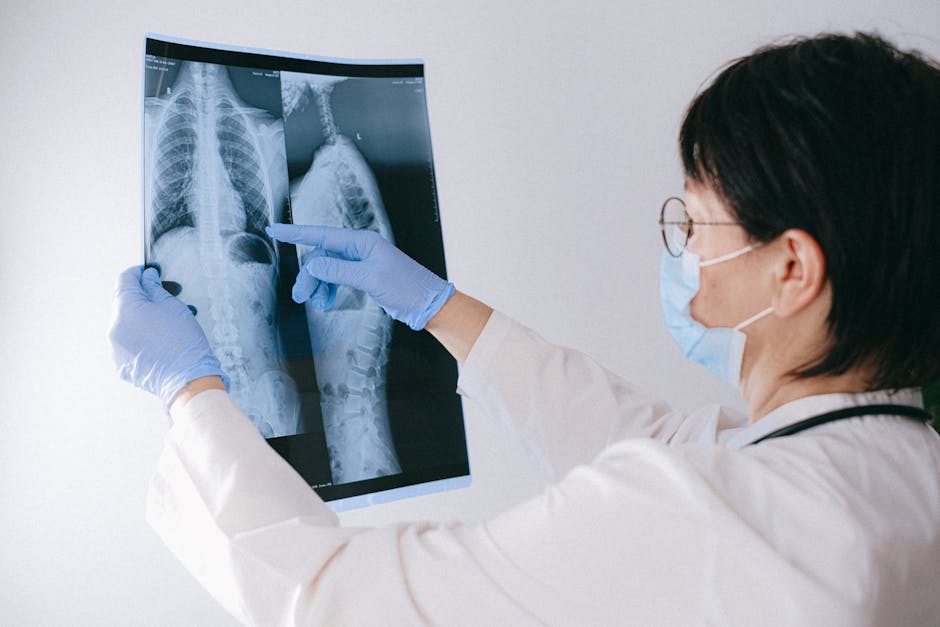
The human body absorbs immense forces in a head-on collision, leading to severe and often life-changing injuries. The upper body—head, neck, and chest—typically bears the brunt of the impact, but lower body injuries are also common as the vehicle crumples. The most frequent head-on collision injuries include traumatic brain injuries, spinal cord damage, broken bones, internal organ damage, and severe whiplash.
For a comprehensive look at these injuries, we’ve prepared a detailed resource: What Kind of Injuries Are Caused by a Head-On Collision?
Traumatic Brain and Head Injuries
The brain is extremely vulnerable in a head-on collision. The violent motion can cause the brain to impact the inside of the skull, leading to a range of injuries:
- Concussions and Traumatic Brain Injuries (TBIs): These range from temporary disruption of brain function to severe contusions and tissue tears. A coup-contrecoup injury involves two impacts as the brain rebounds inside the skull.
- Skull Fractures: These can be simple cracks or complex breaks where bone fragments pierce brain tissue, increasing the risk of infection and further damage.
- Diffuse Axonal Injury (DAI): This devastating injury occurs when the brain’s connecting fibers tear due to rapid shifting, often resulting in a coma. Research on head injury risk highlights the frequency of these injuries even in modern cars.
Long-term cognitive effects like memory loss, personality changes, and difficulty concentrating can be permanent, making it essential to understand your rights.
Neck, Back, and Spinal Cord Damage
The violent jerking motion puts enormous stress on the spine, risking damage that can lead to permanent disability.
- Whiplash: Common and often underestimated, whiplash involves the stretching of neck muscles and ligaments, which can lead to chronic pain and nerve issues.
- Herniated Discs and Vertebrae Fractures: The impact’s pressure can cause spinal discs to rupture or vertebrae to break, leading to intense pain and potential spinal column instability.
- Spinal Cord Compression and Paralysis: If damaged discs or bones press on the spinal cord, it can disrupt nerve signals, leading to paralysis (quadriplegia or paraplegia). These conditions require lifelong care, and the financial burden is staggering, as illustrated by tragic events like the Deadly Casco Crash Illustrates Dangers of Head-On Collisions.
Torso, Internal, and Facial Injuries
The chest and abdomen house vital organs that are vulnerable to crushing forces and sudden deceleration.
- Broken Ribs and Punctured Lungs: Broken ribs are common and can be dangerous if sharp fragments puncture a lung.
- Internal Bleeding and Organ Damage: The force of a seatbelt or the impact itself can rupture or lacerate the spleen, liver, kidneys, and other organs. Internal bleeding is a silent killer that requires immediate medical attention.
- Cardiac Contusion: The heart muscle can be bruised from chest impact, potentially leading to irregular heart rhythms.
- Facial Injuries and Disfigurement: Impact with the steering wheel, dashboard, or glass can cause broken facial bones, lost teeth, and deep lacerations, often resulting in permanent scarring and emotional trauma.
These injuries profoundly affect daily life, often making work and simple tasks impossible. For more on your rights in Maine, see our page on Common Types of Car Accident Injuries: Understanding Your Rights in Maine.
The Long-Term Consequences: Physical and Psychological Recovery

Surviving a head-on collision is often just the beginning of a long and challenging recovery. Many survivors find their lives are never the same. The physical aftermath frequently includes chronic pain from nerve or spinal damage that requires ongoing medication and therapy. In severe cases, permanent disability such as paralysis or cognitive impairment from a TBI becomes a life-altering reality.
Recovery from head-on collision injuries demands extensive and ongoing medical care. This includes years of specialist appointments and intensive rehabilitation like physical, occupational, or speech therapy. The accumulating medical bills create immense financial strain on top of the physical and emotional challenges. This often leads to a significant lost quality of life, as survivors may be unable to work, enjoy hobbies, or maintain social connections. For more information on your rights regarding these issues, visit Common Types of Car Accident Injuries: Understanding Your Rights in Maine.
The Hidden Scars: Psychological Impact
The psychological wounds from a head-on collision can be as debilitating as the physical ones. These hidden scars require professional treatment and have a profound impact on a survivor’s life and family.
- Post-Traumatic Stress Disorder (PTSD): Many survivors experience flashbacks, nightmares, and severe anxiety, feeling as though they are reliving the crash. This can make normal life feel unsafe.
- Anxiety and Depression: The combination of trauma, chronic pain, and lost independence often leads to clinical anxiety and depression, characterized by feelings of hopelessness and isolation.
- Fear of Driving (Vehophobia): An intense fear of being in a car can severely restrict a survivor’s independence, impacting their ability to work or run errands.
- Impact on Family: The emotional and physical toll extends to the entire family. Spouses may become caregivers, and the family dynamic shifts to accommodate a new, difficult reality.
At Hardy Wolf & Downing, we recognize that these psychological injuries are real and deserve compensation. Your mental health is a critical component of your overall recovery and must be accounted for in any legal claim.
Navigating the Legal Aftermath in Maine
After a head-on collision, understanding your legal rights in Maine is crucial for securing the compensation you need. Maine is an “at-fault” state, meaning the driver who caused the accident is financially responsible for the damages. Proving their negligence—the failure to drive safely—is the key to your claim.
Insurance companies will often try to shift blame or minimize your claim. An experienced legal team can build a strong case to prove liability so you can focus on healing from your head-on collision injuries. Learn more about our approach on our Head-On Collision page.
Common Causes and Establishing Liability
Head-on collisions are almost always caused by driver error. Establishing liability requires identifying the cause, which often includes:
- Distracted driving (texting, etc.)
- Driving under the influence (DUI) of alcohol or drugs, a factor in many tragic crashes like this Alcohol Suspected in Recent Fatal Head-On Collision
- Speeding or driving too fast for conditions
- Wrong-way driving
- Fatigued driving
- Improper passing
To prove fault, an attorney will gather evidence like police reports, witness statements, traffic camera footage, and accident reconstruction analysis.
Essential Steps to Protect Your Rights
What you do immediately after a crash can significantly impact your health and legal case. Follow these essential steps:
- Seek Immediate Medical Attention: Adrenaline can mask serious injuries like concussions or internal bleeding. A doctor’s visit creates a crucial medical record linking your injuries to the crash.
- Document the Scene: If it’s safe, take photos and videos of vehicle damage, the location, and your injuries. Get contact information from any witnesses.
- Report the Accident: Call the police to create an official report and notify your insurance company.
- Do Not Admit Fault: Avoid apologizing or making statements that could be used against you. You don’t have all the facts in the moments after a crash.
- Understand Insurance: Be aware of Maine’s minimum insurance requirements, but know that severe injuries often exceed these limits.
- Contact an Attorney: An experienced personal injury attorney can navigate the legal complexities, properly value your claim, and advocate on your behalf against insurance companies.
Frequently Asked Questions about Head-On Collisions
How does speed affect the severity of head-on collision injuries?
Speed has an exponential effect on injury severity. Because kinetic energy quadruples when speed doubles, a collision at 60 mph has four times the destructive energy of one at 30 mph. This is why head-on collision injuries are so much more severe at higher speeds. The increased force leads to greater vehicle intrusion, more violent deceleration, and more extensive trauma to the brain, spine, and internal organs. Survival chances drop dramatically in crashes above 43 mph.
Can I still have a claim if I was partially at fault for the accident in Maine?
Yes. Maine uses a “modified comparative negligence” rule. This means you can still recover damages for your head-on collision injuries as long as you are found to be 50% or less at fault. Your total compensation award will simply be reduced by your percentage of fault. For example, if you are 20% at fault, you can recover 80% of your damages. Because insurance companies will try to assign you more fault to reduce their payout, having an attorney to protect your interests is critical.
Why do I need to see a doctor even if I feel fine after a crash?
Seeking immediate medical attention is crucial for two reasons. First, adrenaline from the crash can mask pain from serious, life-threatening injuries like internal bleeding, organ damage, or concussions. Symptoms of injuries like whiplash often don’t appear for 24-48 hours. Second, from a legal standpoint, seeing a doctor creates an official medical record that links your injuries to the accident. Delaying treatment gives insurance companies an opportunity to argue your injuries weren’t caused by the crash, which can weaken your claim for compensation.
Conclusion: Reclaiming Your Future After a Devastating Crash
Head-on collisions are catastrophic events that inflict devastating physical, psychological, and financial burdens. As we’ve discussed, the severe forces involved lead to a wide spectrum of head-on collision injuries, from traumatic brain damage and spinal cord injuries to chronic pain and PTSD. The path to recovery is long, and for many, life is permanently altered.
But you do not have to face this journey alone. Understanding your legal rights is the first step toward reclaiming your future. In Maine, the at-fault driver can be held accountable for the harm they’ve caused. This means you can seek compensation not just for medical bills, but for lost wages, future care, and the profound pain and suffering you and your family have endured.
At Hardy Wolf & Downing, we have spent years helping Maine families steer the aftermath of catastrophic accidents. We combine empathetic care with the legal tenacity required to secure the justice you deserve, and we are not afraid to go to trial to achieve it.
Your focus should be on healing. Let us handle the insurance companies and legal complexities. If another driver’s negligence caused your head-on collision injuries, we are here to help you secure the resources needed for your recovery.
Contact us about your head-on collision case today. Your consultation is the first step toward justice, and we’re ready to stand beside you.