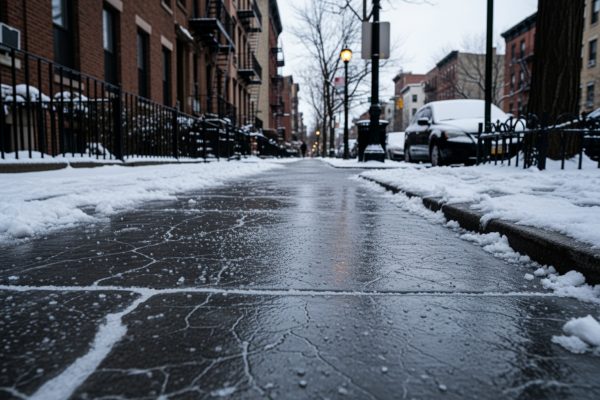
If you were hurt in a slip-and-fall on ice in Maine, the first question is usually who was responsible for the ice. Often the answer is the person or business that controls the property: a store, a landlord, a property manager, or a homeowner. Sometimes a snow removal contractor is involved. Sometimes no viable claim exists. Public sidewalks present special barriers to recovery, but location alone does not determine whether any person or business is responsible. This guide explains how Maine law approaches each situation and what to do now to protect your claim.
Quick Answer: Who Is Responsible for Ice in Maine?
- The property owner or business that controls the area is the usual starting point.
- A landlord may be responsible for shared areas such as entrances, stairways, and parking lots.
- A tenant may be responsible for areas the lease puts under their control.
- A snow removal contractor generally owes no independent duty to the public, unless the contractor personally created the dangerous condition.
- Maine law bars claims against towns and cities for injuries to pedestrians caused by snow, ice, or slippery conditions on sidewalks and crosswalks. Claims involving the State or other government property require a separate immunity analysis. (23 M.R.S. § 3658).
Maine’s Duty of Care on Ice and Snow
Maine generally requires property possessors to use reasonable care toward people lawfully on the premises. Maine has abolished the old distinction between business invitees and social guests for this duty. The duty is to act reasonably under the circumstances—not to guarantee that every surface is ice-free. Whether the visitor was permitted to use the particular area can also matter.
What You Generally Have to Show
A fall on ice does not, by itself, establish negligence. Depending on the circumstances, you generally need evidence that:
- The defendant owed you a duty concerning the area where you fell.
- A dangerous snow or ice condition caused the fall.
- The defendant created the condition, knew about it, or reasonably should have discovered or anticipated it, including a known recurring condition.
- The defendant failed to take reasonable precautions under the circumstances.
- That failure caused injuries and resulting losses.
What About Storms and “Natural” Ice?
Owners sometimes argue that they cannot be expected to clear ice while snow is still falling, or that natural ice is just part of Maine winters. Maine does not give owners a blanket pass. What counts as reasonable depends on the weather, expected use, available precautions, and other circumstances. The law does not require every surface to remain continuously ice-free.
Who May Be Responsible? A Comparison
| Who | When they may be responsible | What to find out | Key limit |
| Business owner or operator | Customers and visitors are expected to use the lot, entrance, or walkway. | Who controls the area, whether it was salted or sanded, and whether warnings were posted. | The owner must have known, or should have known, in time to act. |
| Landlord | Shared entrances, stairs, walkways, and parking that the landlord controls. | The lease, who arranges plowing and sanding, and who received earlier complaints. | Tenant control may limit landlord liability, but you must also review retained duties and exceptions. |
| Tenant or occupant | Areas the lease or the situation puts under their control. | What the lease says and who actually maintained the area. | Responsibility depends on actual control, not just the paperwork. |
| Homeowner | A guest, delivery driver, or other visitor reasonably expected on the property. | Whether the walkway was treated, and whether a homeowner policy may help with guests’ medical costs. | Trespassers are treated differently. |
| Snow removal contractor | May be responsible if the contractor personally created the dangerous condition. | The contract, who did the work, and when. | No independent duty to the public otherwise. |
| Town, city, or state | Not for snow or ice on a sidewalk. | Who owns the property where you fell. | Other government property follows special notice rules with shorter deadlines. |
Why Control Matters in Apartments and Rentals
In cities like Portland and Lewiston, many rental buildings share entrances, stairways, and parking. That makes control the central question: who decides when the walkway is salted, and who hires the plow? A landlord who controls common areas generally carries responsibility for them. A lease can move some areas to a tenant, but it does not erase a landlord’s duty for areas the landlord still manages.
A landlord generally is not responsible for dangerous conditions in an area under a tenant’s exclusive control, but exceptions can apply—for example, undisclosed latent defects, negligently performed repairs, or an express agreement to maintain the premises. A general right to enter for inspection or repair does not, by itself, establish retained control.
Hiring a snow removal contractor does not automatically transfer the property possessor’s duty to that contractor. Maine distinguishes between failing to remove naturally accumulated ice and negligently creating a new dangerous condition through the work performed. Merely plowing snow and leaving underlying ice untreated was insufficient to establish a duty in Davis v. R C & Sons Paving, Inc. The contractor’s role, work, and agreement still require review, including whether a separate contractual claim is available. Whether that applies depends on the contract and the facts.
Cities and towns across Maine, including Portland and Lewiston, often set their own sidewalk snow-clearing rules for property owners. A sidewalk-clearing ordinance can require an adjoining owner to remove snow or ice, but violating that ordinance does not, by itself, give an injured pedestrian a civil claim against the owner. Nor does the ordinance make the municipality liable. A separate claim may require evidence that the private party possessed or controlled the area, affirmatively created the hazard, or had another legally recognized obligation.
When Your Own Actions Come Up
Maine follows a modified comparative negligence rule. In a case against one defendant, an injured person cannot recover if they are equally or more at fault than that defendant. If recovery is allowed, the jury reduces total damages by a dollar amount it considers just and equitable in light of the injured person’s responsibility—not by automatically applying a percentage.
Insurers often argue that the injured person was not watching their step or had a cleared route available. Those arguments are common, and they are easier to answer when you have photos and records from the day of the fall.
What to Do After a Fall on Ice in Maine
- Get medical care. Tell the provider exactly how you fell. Some injuries show up hours or days later.
- Report the fall in writing to the owner, manager, or landlord. Ask for a copy of any incident report.
- Photograph the spot. Capture the ice, the surrounding walkway, lighting, any salt or sand, and any warning signs.
- Write down the details. Note the date, time, weather, and what the area looked like in the days before.
- Get witness names and phone numbers.
- Keep your shoes and clothing as they were.
- Be careful with statements. You can speak with an attorney before giving a recorded statement to any insurance company, and avoid posting about the fall online.
- Keep records of treatment, bills, and missed work.
Time matters more with ice than with most hazards. Ice melts, gets salted, or gets plowed away, sometimes within hours, and with it goes the best evidence of what the area looked like when you fell.
Deadlines
An ordinary negligence lawsuit generally must be filed within six years after the claim accrues, usually on the date of the fall. Different deadlines and notice requirements can apply. For claims permitted under the Maine Tort Claims Act, you generally must provide written notice within 365 days and file suit within two years, subject to exceptions. Other statutory claims may have different requirements. Ask promptly rather than assuming you have six years. Read more in our guide to Maine’s statute of limitations.
Frequently Asked Questions
Can I sue if I slipped on ice at a store in Maine?
You may be able to, if the store knew or should have known about the ice and did not treat it, clear it, or warn customers within a reasonable time. Maine stores owe customers a duty of care. Photos, an incident report, and witness names help show what the store knew and when.
Is my landlord responsible if I slip on ice at my apartment?
Often, if the ice was in a shared area the landlord controls, such as an entrance, stairway, or parking lot. Your lease matters, because it may give you control of some areas. What counts is who actually controlled and maintained the spot where you fell.
Can I sue a town or city for slipping on an icy sidewalk?
Maine law generally bars a claim against a town or city for a pedestrian’s injuries caused by snow, ice, or slippery conditions on a sidewalk or crosswalk. That does not automatically resolve a claim against a private party who affirmatively created a dangerous condition. Identifying the exact location, who controlled it, and how the ice formed is important. (23 M.R.S. § 3658).
Is a snow removal company responsible if I fall on ice?
Usually the property owner is the first question, because a contractor generally has no independent duty to the public. The exception is a contractor who personally created the dangerous condition. Whether that applies depends on the contract, the work performed, and what happened on the day you fell.
How long do I have to file a slip and fall claim in Maine?
Maine’s general deadline to file an injury lawsuit is six years. Some claims, including those against government entities, have special notice rules and much shorter deadlines. Because ice evidence disappears quickly, it is wise to act long before any deadline and speak with an attorney early.
Key Takeaways
- The starting question is who controlled the area where you fell.
- Maine property owners owe a duty of care to non-trespassers who are reasonably expected to use their property.
- Landlords, tenants, and owners can each be responsible, depending on who controls the area.
- Hiring a snow removal contractor does not automatically give every visitor a claim against that contractor. A contractor that does not possess the property may be liable if its work negligently creates a dangerous condition; merely failing to remove naturally accumulated ice is generally not enough.
- Government entities are not liable for ice on sidewalks.
- If your own fault is 50% or more, Maine law bars recovery, so careful documentation matters.
- Photograph the spot and report the fall in writing as soon as you can.
Talk With a Maine Injury Attorney
Hardy, Wolf & Downing has represented injured Mainers since 1976 from offices in Portland and Lewiston. If you were hurt in a fall on ice and are not sure who is responsible, you can talk through your options with an attorney using our free case evaluation form. Asking a question costs nothing. You can also read how the process works before you decide.